The Company Behind Orkin Makes 19.3% Margins on Pest Control. Its Latest Quarter Slipped
The pest giant's numbers show where the money really sits — repeat visits, not one-time jobs.

Rollins pulled in about 109 billion yen in operating profit last year, a 19.3% margin on pest control. And 75% of its sales come from contracts that repeat. If you run a pest control or plumbing company, the 75% figure is the one to stare at.
What Rollins Just Put on the Table
Rollins runs brands like Orkin, and its 2025 results are public: about 564 billion yen in sales and about 109 billion yen in operating profit, a margin of about 19.3%. That is a business where people drive to buildings and treat them. Plenty of contractors would take that margin tomorrow.
The scale is real. At the end of 2025 the group had 21,946 employees, more than 800 company and franchise locations in about 70 countries, and more than 2 million customers. Per employee, that works out to about 25.7 million yen in sales and about 5 million yen in operating profit.
But the number that should stop you is not the margin. It is what happens to the money after it comes in.
The Cost Line That Decides Your Month
Materials — chemicals and supplies — are only 6% of sales, about 33.8 billion yen. On-site service labor is 31.0% of sales, about 174.9 billion yen, and service vehicles add 4.2% more. The biggest cost is what the source calls "people and vehicles" — the crews and trucks that drive to each site.
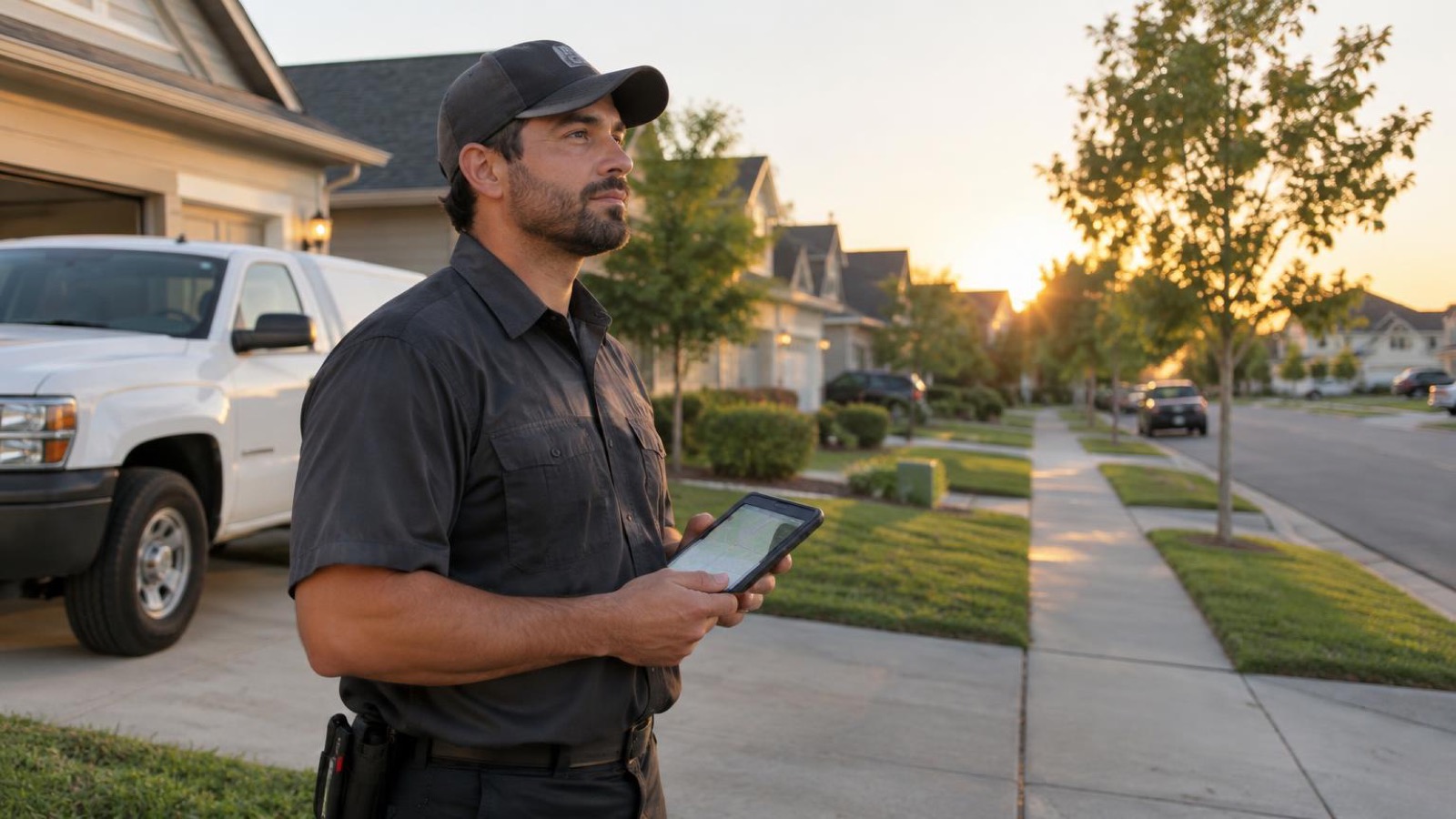
My read: the money is not in the spray. It is in the drive. The source walks through it: if a tech hits 10 stops in a day and those stops are spread out, most of the shift goes to driving, and drive time brings in nothing while fuel and vehicle upkeep pile up. If those stops sit close together in one neighborhood, the next one is a few minutes away.
Rollins runs its own system to plan visits and patrol routes, and packing customers into a small area to cut mileage is described as a key strength. The source calls it the "geographic density of customers".
That still leaves the harder question. What keeps those customers on the schedule visit after visit?
75% of the Money Comes Back
Of Rollins' annual sales, 75% comes from recurring service contracts. One-time extermination work is 15%. Additional work is 10%. Since the visits repeat on a schedule, the company can plan ahead and keep operations steady.
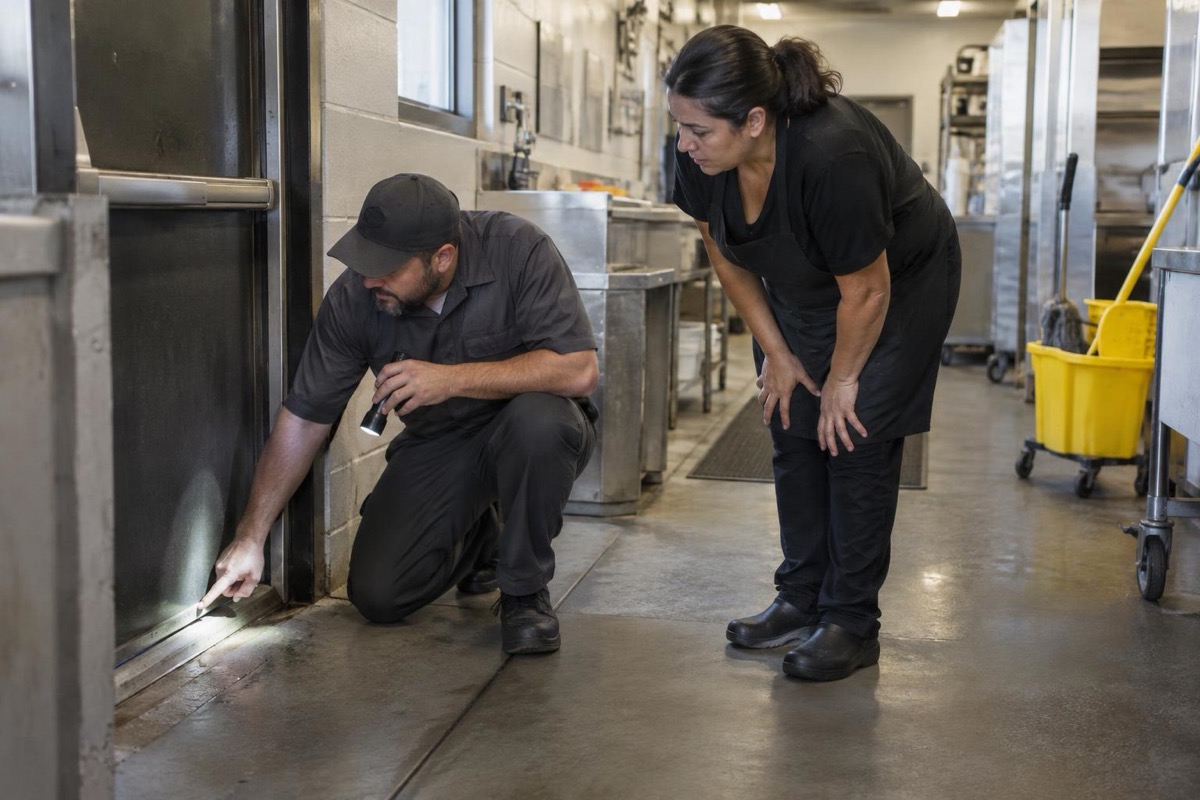
Most of the work is not emergency spraying. In a restaurant kitchen, the job is checking for gaps around loading dock doors, standing water, and food waste — cutting the causes that let pests in or nest. The source describes the model as "prevention and daily management to keep bugs from appearing in the first place".
Here is the piece I would copy tomorrow. Orkin leaves detailed inspection records — how clean the site is, what the building looks like, what was treated, which chemicals were used, and where the monitors sit — and hands that report to the customer. The source says that makes it easier to show a customer what the ongoing fee covers.
And it goes beyond kitchens. At a Saddle Creek warehouse in Texas that holds goods for Del Monte Foods, Orkin crews came weekly to inspect and maintain, and they trained new warehouse staff on pest control. The firm holding the goods has to show the cargo owner it meets strict hygiene standards, so prevention is built into daily operations.
Then the newest quarter landed.
The Quarter Where Costs Outran Revenue
In July–September 2026, Rollins' revenue was about 163 billion yen, up 6.2% year on year, or 4.4% organic once acquisitions are stripped out. Operating profit was about 33.4 billion yen, down 1.0%, and the margin fell from 21.9% to 20.5%.
The reason is how fast costs grew. Both service costs and overhead rose about 8.4% against that 6.2% revenue growth. Management says the hard part is winning new residential customers.
That is a company that admits its market is easy to enter and full of rivals. In 2025, sales and marketing ran about 72.7 billion yen, 12.9% of revenue. And the company is moving its ad spend out of older digital tactics and into channels that perform better and working to be found through generative AI.
For a comparison, Asante, a Japanese pest control company, posted about 14.4 billion yen in sales, about 840 million yen in operating profit, and a 5.8% margin for the year ending March 2026. Asante's termite work also carries a five-year warranty after the build, plus regular inspections. The source's point is that the gap is not simply that Japan's market is one-off while the US market repeats. It is the mix of construction work versus recurring service.
What This Means If You Sell Pest Control or Plumbing
My read, not the report's.
Picture a pest control company with a full book of residential accounts and a good spring. Every call is a one-time treatment, and every one of those jobs is a fresh sale. The owner's phone rings, the tech drives across town, treats the house, and leaves. Next spring the owner has to sell every one of those accounts again. And the truck earned nothing on the way there.
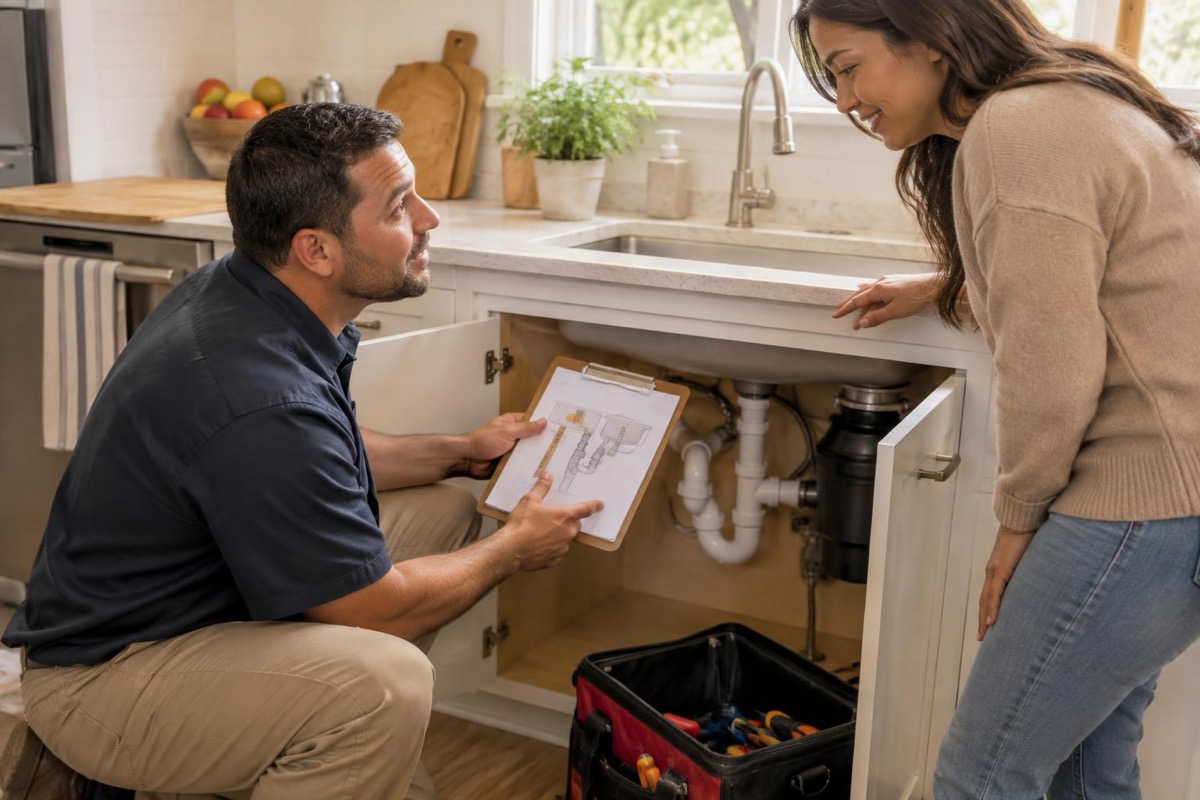
Now picture the same company selling an annual plan with a written inspection report each visit. The drive is the same. The difference is that the customer is already booked next quarter, and the report gives the office something to point at when the customer asks what they are paying for. That is what the 75% number is built on. The source is honest about the hard part: preventive work gets harder to justify when few problems show up. The paperwork is what carries it.
Picture a plumbing company. Same shape. A burst pipe is a one-time job. A water heater flush, a shutoff valve check, and a sewer line camera inspection on a schedule is a recurring contract. If your techs are already in a neighborhood for one call, the second and third stops in that same zip code cost you almost nothing in drive time. That is the density idea, and you can build it without any software — just by booking the neighborhood together.
Picture a two-truck shop that just spent money on ads. Leads come in, jobs get done, and the owner has no record of which jobs came back. That owner cannot tell whether the ad money bought a customer or a single transaction. Rollins' own quarter shows what happens when costs grow faster than revenue: service costs and overhead each rose about 8.4% while revenue rose 6.2%, and the margin fell while sales still climbed.
How to Use This in Your Business This Week
- Split last year's invoices into two piles. One-time jobs in one, repeat or contract work in the other. Add up each pile. It takes an afternoon and it tells you what business you are actually in.
- Time your drives. Pick three days from last month and write down the minutes between stops. If the number surprises you, your routes are the problem, not your closing rate.
- Start the written record on every visit. What you saw, what you treated, what you used, where you put monitors. Hand it to the customer. This is the cheapest item on this list, and the written report makes the recurring fee easy to explain.
- Offer the annual plan at the moment of the emergency. The customer is standing in the problem right now. Give your tech one sentence to say before leaving that offers the yearly plan while the problem is still fresh.
- Book by neighborhood, not by first-come. When a call comes in, look at the week's map and put the new job next to the closest existing stop. A plumbing dispatcher can offer the customer the two open slots that fit that route and let them pick.
- Watch cost growth against revenue growth every month. Rollins' service costs and overhead each rose about 8.4% while revenue rose 6.2%, and profit fell. If your costs grow faster than your sales two months running, stop adding spend and fix the route or the price.
- Write down where your customers come from. Rollins spent about 72.7 billion yen on sales and marketing in 2025, 12.9% of revenue, and is moving that spend into channels that perform better to find new residential customers. You do not need a budget that size. You need to know which channel produced the last 20 jobs.
Mistakes to Avoid
- Chasing one-time jobs because the ticket looks bigger. A big one-time job still has to be sold again next year.
- Selling prevention with no paperwork. The value of prevention gets harder to see when few problems show up. The report is what carries it.
- Adding a truck before you add density. Another truck on spread-out routes adds cost, not profit.
- Letting cost growth run unmeasured. Rollins' service costs and overhead each rose about 8.4% while revenue rose 6.2%, and profit fell.
Free 30-minute review of your ads, website and setup.
Disclosure: Brandon Correll founded SalesBeast, which is mentioned and advertised on this page. Facts are drawn from the linked sources; analysis and advice are his opinion.
Brandon Correll founded SalesBeast. Over $75 million in online sales, built two companies to eight figures, and built multiple 8-figure sales teams.
 Business
Kansas Harley-Davidson Store Closes After Seventy-Seven Years in Business
Keep reading
 Business
A 30-Year-Plus Sales Vet: Your Reps Score Similar Deals Two Different Ways
 Business
Cars Under $30K Are Turning 20% Quicker. My Read for Dealers and Contractors
 Business
Contractor Costs Jumped Nearly 9% — and Roughly 30% of Project Volume Was Delayed, Stalled or Canceled
 Business
About 4 of 7 Plumbing Calls Get Answered. That's Where Your Jobs Go
 Business
HVAC Buyers Do Not Want a Spec Sheet. They Want Answers.
 Business