Contractor Costs Jumped Nearly 9% — and Roughly 30% of Project Volume Was Delayed, Stalled or Canceled
Costs rose nearly 9% and roughly 30% of project volume was delayed, stalled or canceled — and roofing is one of the trades where more than half the workforce is foreign-born.

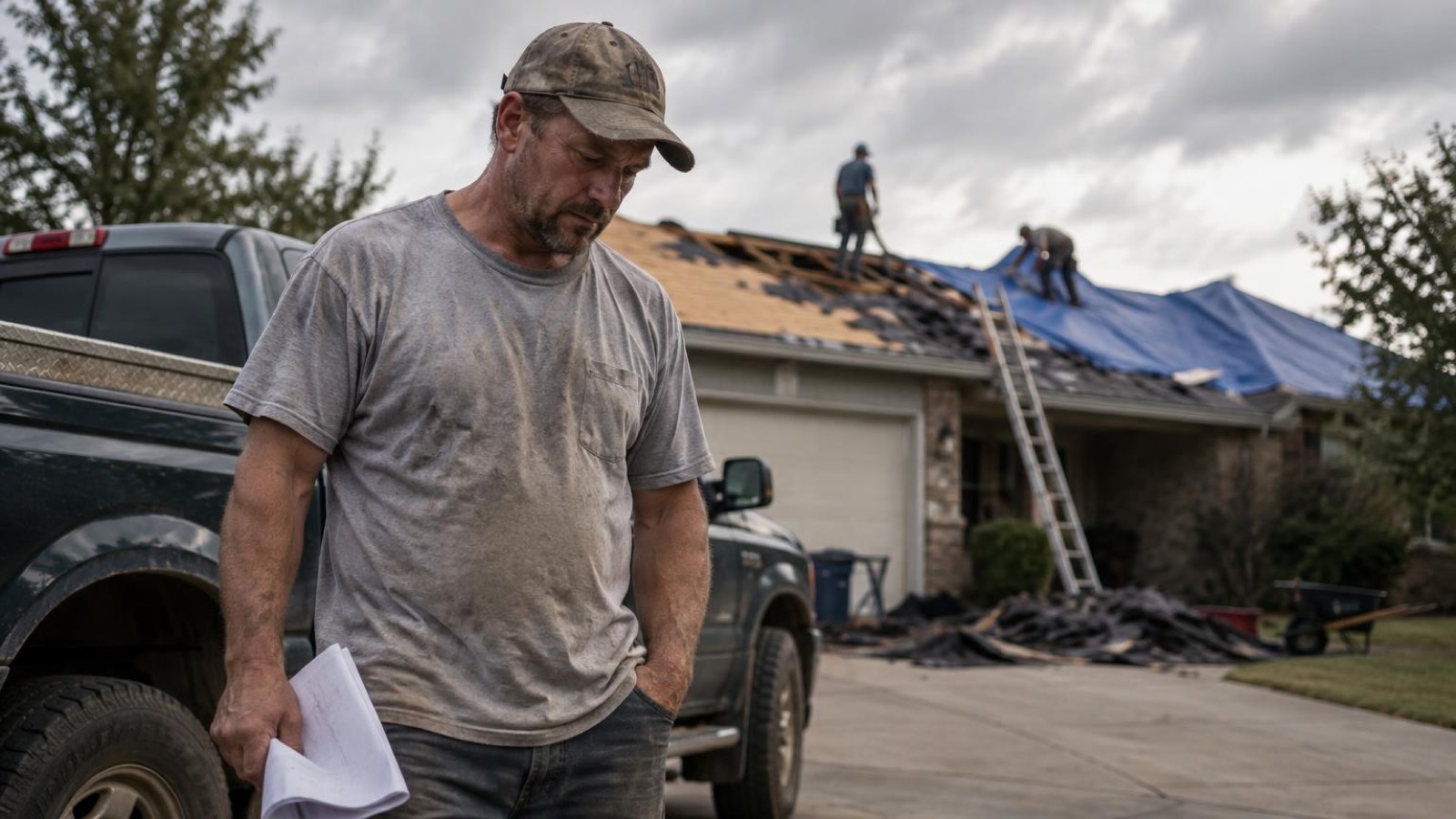
Roughly 30% of project volume got delayed, stalled or canceled in six months. That's the number Kermit Baker put in front of contractors at METALCON 2026 in Orlando. He's the former chief economist at the American Institute of Architects. If you run an HVAC or roofing company, that number is about your pipeline.
Contractors Heard the 2027 Outlook at METALCON
Kermit Baker, the American Institute of Architects' former chief economist, gave the economic keynote at METALCON 2026 in Orlando, which ran Oct. 7-9. He laid out what keeps pressing on contractors: rising material prices, higher borrowing costs, labor shortages and project delays.
None of that surprises anyone who has priced a job this year. The size of it might.
Construction input costs were up nearly 9% from a year earlier. Metals rose the most, including steel, copper and aluminum. If you quote metal panels, flashing, ductwork or equipment, that is your cost line moving under your feet.
Then the labor picture. Baker said 35% of construction workers were born outside the U.S., and in several trades, including roofing, that share passes 50%. The workforce is also aging, and contractors are having a hard time filling open jobs.
"Probably the greatest challenge facing the industry at present is the labor outlook," Baker said.
The pipeline is where it gets personal. About 30% of project volume had been put off, halted or dropped in the six months before he spoke. The reasons he gave: customers who could not decide, shifting market conditions, budgets that did not stretch and trouble getting financing.
My read: most of those reasons are about the customer's money and nerve, not your workmanship.
One exception stood out. Baker said data-center construction has only gone up: "the sky seems to be the limit." By the end of the year, spending on data centers is expected to be larger than what goes into traditional office buildings.
The rest of the outlook is restrained. Forecasters expect overall construction spending to stay flat this year and to rise only a little in 2027, and that gain probably will not keep up with inflation.
The show itself grew. The 2026 event had 273 exhibiting companies, 9.2% more than 2025, and verified on-site attendance was up more than 5%. It returns to Louisville, Ky., Oct. 26-28, 2027.

Why This Is Landing Right Now
Baker framed all of it as ongoing pressure rather than a one-year blip — rising material prices, higher borrowing costs, labor shortages and project delays all pushing at the same time.
Two of those hit your customer directly. My read: borrowing costs make a financed furnace replacement or a new roof feel bigger than the customer expected. Material prices make your quote bigger than the one you sent before the last increase.
The labor side is slower-moving. An aging construction workforce and open jobs that contractors struggle to fill mean the crew you have is the crew you get.
And the one thing pulling hard the other way is artificial intelligence money flowing into data centers, which is why that sector keeps climbing.
So you have a market where the customer hesitates, the material costs more, the crew is thin, and one narrow slice of commercial work is booming. That is the year you are selling into.
What It Means If You Sell HVAC or Roofing (My Read)
This part is my read, not Baker's. Here is how I think it plays out on your floor.
Picture an HVAC company. A homeowner gets a quote for a system replacement. Financing costs are elevated, so the monthly number looks heavier than they expected. They say they need to think about it. That is indecision, and Baker listed it as one of the main reasons project volume stalls. Your quote did not lose on price. It lost on a decision the customer could not make. My read: your follow-up cadence is now worth more than your ad budget.
Picture a roofing contractor. Baker's numbers put roofing among the trades where more than half the workforce is foreign-born, and the overall workforce is aging. That means your install capacity is your ceiling. If you can only put on so many squares a week, selling more jobs than you can install does not grow the business — it just creates angry customers. The win is closing a higher share of the quotes you already have and pricing to cover the labor you can actually get.
Picture a commercial flat-roof or mechanical service company. By the end of the year, spending on data centers is expected to be larger than what goes into traditional office buildings. If you do large commercial work, that is where the money is moving. If you are purely residential, that money is not coming to your driveway, and you should plan around the restrained forecast instead.
Seven Things I'd Do This Week
- Pull every unsold quote you have. Open your CRM or your spreadsheet. Count how many have no next step scheduled. Give it 20 minutes. Baker's 30% figure covers projects that were delayed, stalled or canceled. My read: a chunk of those are worth another call.
- Tag each one with a reason. Indecision, budget, financing or timing. Four buckets, nothing fancy. If most land in indecision, your problem is follow-up, not price.
- Put the monthly number next to the total on every quote. Higher borrowing costs are one of the pressures Baker named. A customer comparing two big totals feels something different than a customer comparing two monthly payments. Show both.
- Re-price your material line. Input costs rose nearly 9% year over year, with metals steeper. If your quote template still carries older metal pricing, you are eating the difference on every job.
- Build a five-touch follow-up and put it in the calendar. Day 1 quote, day 3 text, day 7 call, day 14 check-in, day 30 close-the-file. Five touches, written down, assigned to a name.
- Check crew capacity before you buy another lead. Labor is the challenge Baker named as the greatest. More leads into a full schedule is just extra admin work.
- If you do commercial work, make three calls to GCs or property managers this week about data-center projects. That is the line in the outlook that is climbing fastest.
Here are three follow-ups you can send today, written out so you can copy the shape of them.
HVAC, day 3 after the quote. Say who you are and which company you are with. Name the system and say the quote is still open. Then ask two questions: is the timing the issue, or the number? Tell them you can help with either one.
Roofing, day 7 voicemail. Say who you are and that you are following up on the roof quote. Say you are not calling to pressure anyone. Say material prices moved this year and you would rather lock their number now than re-quote later. Ask them to call or text back.
Either trade, day 30. Say you are closing out the file on the job. If it is a no, that is fine — say the word and you will stop. If it is a not yet, ask which month works and say you will call then.

Mistakes That Cost You the Job
- Cutting price to beat indecision. Baker's list puts customer indecision and financing trouble among the primary reasons. A discount does not fix a customer who cannot decide. A clearer monthly number might.
- Buying leads while your crew is short. Labor is the constraint Baker named as the greatest challenge. More leads into a full schedule is just extra admin work.
- Quoting from memory. Input costs rose nearly 9%, with metals higher. Rebuild the material line before you send the next quote.
- Treating stalled as lost. About 30% of project volume was put off, halted or dropped. My read: some of that comes back. The ones that come back go to whoever kept calling.
Where to Start This Week
If you read the seven steps above and your honest reaction was that you do not know which of these is your real problem, you are not alone. You can feel that quotes are sitting. You cannot see which part of the machine is dropping them.
Start with step one. Pull the unsold quotes, tag them with a reason, and look at which bucket is biggest. If indecision wins, your fix is follow-up, not price. If budget or financing wins, your fix is how you present the monthly number. If timing wins, your fix is a calendar and a reason to call back.
That is a 20-minute exercise, and it tells you where to spend the next month. In a year where the forecast says flat spending and rising costs, the owners who win are the ones who know exactly where their pipeline leaks. Start there.
Get my free Game PlanFree 30-minute review of your ads, website and setup.
Disclosure: Brandon Correll founded SalesBeast, which is mentioned and advertised on this page. Facts are drawn from the linked sources; analysis and advice are his opinion.
Brandon Correll founded SalesBeast. Over $75 million in online sales, built two companies to eight figures, and built multiple 8-figure sales teams.
 Business
Kansas Harley-Davidson Store Closes After Seventy-Seven Years in Business
Keep reading
 Business
A 30-Year-Plus Sales Vet: Your Reps Score Similar Deals Two Different Ways
 Business
Cars Under $30K Are Turning 20% Quicker. My Read for Dealers and Contractors
 Business
About 4 of 7 Plumbing Calls Get Answered. That's Where Your Jobs Go
 Business
HVAC Buyers Do Not Want a Spec Sheet. They Want Answers.
 Business
One of Your Strongest Marketing Assets Is Already on Payroll — and It Isn't Your Ad Budget
 Business