About 4 of 7 Plumbing Calls Get Answered. That's Where Your Jobs Go
A homeowner calls until someone answers. Miss three real jobs in a day and that's up to $1,503 gone.

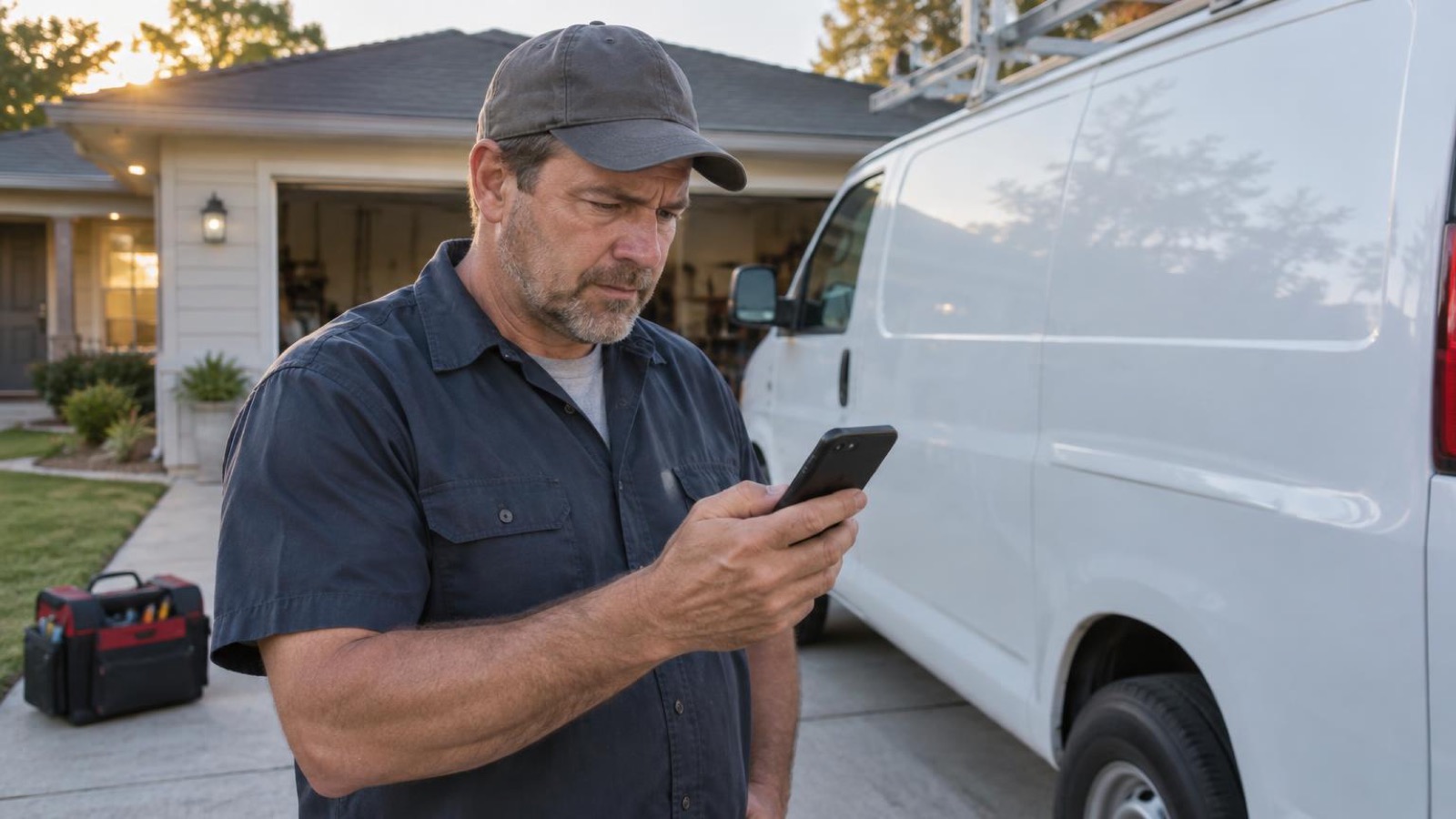
In the article's example, a homeowner calls seven plumbing companies in a row. About four of those calls may reach a live person, and of the calls that get answered, only about one or two are a real lead. The business that answers first has the better odds of winning that customer, plus the referrals and service calls that follow.
The Number That Should Bother You
Seven plumbing companies get the same emergency call. Research from Invoca on how home service leads convert found that only about four of seven calls reach a human. And of the calls that do get answered, just about one or two turn into a real lead.
My read: that leaves about three of the seven calls without a live person on the line. The business that answers first has the better odds of winning that customer, plus the referrals and service calls that follow.
My read: in that moment, speed beats price and beats reputation.
Then there's the money. Angi's estimate for plumbing work is $182 to $501, and most homeowners pay about $341. Miss three real jobs in one day and you're looking at about $546 to $1,503 in lost work, before you count repeat jobs, referrals or the next service call.
That's one day.
The article puts it bluntly: "missing a call means missing revenue".
The reason is practical. The same piece points out that a lot of teams are out in the field serving other customers, and that answering a potential customer while you are in someone's crawl space or attic is hard.
That's the whole problem in one line. The work that pays you is the same work that keeps you off the phone.
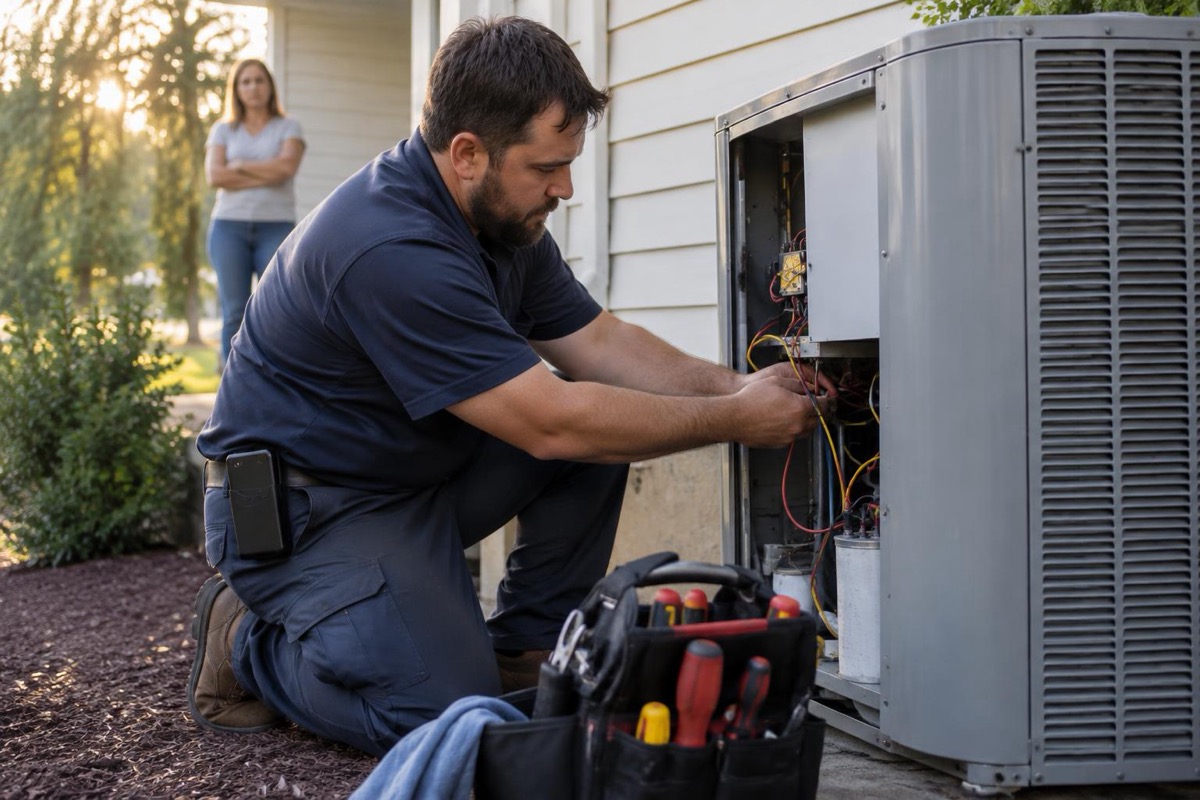
Why Your Phone Is the Weak Spot
Emergencies at home almost never pick a good time to happen (Northwest Indiana Business Magazine). The AC dies in the middle of summer. A pipe bursts in a cold snap and floods the basement. The power keeps flickering.
When an urgent need hits, a homeowner will keep calling companies until a person answers. My read: in that moment, a live voice matters more than a brand name.
Meanwhile the owner is also handling the admin work and the job site. The article notes that small crews, busy seasons, storms and after-hours calls all make phone coverage harder.
So the answer isn't about trying harder. The article's own take is that making a plan for the times when no one is free to answer leads to more chances at work and a better name in the community.
My read: owners plan the truck and the crew, but not the ring.
The bio says Tabetha Alvarado co-owns a Crown Point answering service called Great Lakes Communications, which is women-owned. The bio says the firm has more than 20 years of experience helping companies in Northwest Indiana and the Chicago area, and farther out. It also says the firm offers live answering plus after-hours and customer communication support to medical offices, property managers, home service businesses and other organizations.
I'm not telling you to go hire an answering service. My read: the article treats phone coverage as a plan you build, not a personality trait you're born with.
What This Means for HVAC and Roofing Owners (My Read)
Here's where I stop reporting and give you my take.
Picture an HVAC company in the middle of a summer heat wave. Techs are in the field and one office manager also handles billing. A few calls land close together on a busy afternoon. One gets answered. Others hit voicemail. The homeowner dials the next name on the list, gets a live person, and books the call, plus the maintenance plan and the referral from the neighbor whose unit dies later in the summer. You never knew the call happened.
Now picture a roofing contractor after a big storm. The phone doesn't ring in a trickle, it rings in a flood, and every roofer in the county is slammed. The business that answers first has the better odds of winning that customer. In a storm market, that window closes fast.
My read: a missed-call problem is almost never a staffing problem. It's a routing problem. You don't need more people. You need every ring to land somewhere that captures a name, an address and what's broken.
How to Fix It This Week
- Count the misses before you fix anything. Open last month's call log and tally every call that rang out or hit voicemail during business hours. Twenty minutes. Write the number on a sticky note and put it on your dash.
- Price the misses. Multiply that number by your average ticket. Use the article's math as a template: three missed real jobs a day at $182 to $501 each is $546 to $1,503, before you count repeat jobs or referrals.
- Write down who answers, hour by hour. Who picks up at 7 a.m.? At noon? At 9 p.m.? Who picks up when the office manager is at lunch? If you can't answer that for every hour you advertise, you have a gap.
- Decide the after-hours rule now, not at 9 p.m. on a Sunday. Live answering service, on-call tech, or a form. Pick one and put it on your website where customers can see it.
- Put a three-line script in front of whoever answers. Company name, what's going on at the house, and the address. Nothing else.
- Call your own number. Friday at 6:45 p.m. from a cell phone. Time how long it takes to reach a human. If you get voicemail, you just learned what your customer learns.
- Text every caller a next step. A written window beats a verbal promise, and it gives the homeowner something to hold onto while they wait.
Here are three scripts you can copy today.
HVAC call script: Thanks for calling [company]. Is the system not cooling, or is it not running at all? And what's the address? I can get a tech out [window] — does that work for you?
Roofing storm script: We're booking storm inspections this week. Is it leaking inside, or is it damage you can see from the ground? Give me the address and I'll text you the inspection window.
Missed-call text-back: Sorry we missed you — this is [company]. What's going on at the house, and what's the address? We'll call you right back.

Mistakes That Cost You the Job
- Treating voicemail as a plan. It isn't one. The article's whole point is that the homeowner keeps dialing until a person answers.
- Buying more leads before you can answer the phone. More rings into a broken phone just makes the leak bigger.
- Making one person the entire system. If the office manager is sick, at lunch or on the other line, your coverage drops to zero.
- Assuming they'll try you again. In the article's example, the homeowner called seven companies. They have options, and they're using them.
The Part You Can Actually Control
Everything above comes down to one thing: every ring has to land somewhere that can capture it. That's the part I care about most. Over $75 million in online sales, built two companies to eight figures, and built multiple 8-figure sales teams for our own businesses.
If your phone is the leak, I would start with a simple rule: every call, text and form goes into one place your team actually checks. No side inboxes. No sticky notes. One owner for each lead, one response time, one place to look.
Here is what I would do: pick one place where every lead lands, give it one owner, and check it every morning. Then hold the team to a response time you can measure. That is not a software feature. It is a decision.
My read: the tool matters less than the rule. SalesBeast CRM is the name I would look at first if I were building that system today.
See SalesBeast CRMOpens salesbeast.com
Disclosure: Brandon Correll founded SalesBeast, which is mentioned and advertised on this page. Facts are drawn from the linked sources; analysis and advice are his opinion.
Brandon Correll founded SalesBeast. Over $75 million in online sales, built two companies to eight figures, and built multiple 8-figure sales teams.
 Business
Kansas Harley-Davidson Store Closes After Seventy-Seven Years in Business
Keep reading
 Business
A 30-Year-Plus Sales Vet: Your Reps Score Similar Deals Two Different Ways
 Business
Cars Under $30K Are Turning 20% Quicker. My Read for Dealers and Contractors
 Business
Contractor Costs Jumped Nearly 9% — and Roughly 30% of Project Volume Was Delayed, Stalled or Canceled
 Business
Factories Are Selling Around Their Dealers. Here's the Wake-Up Call for Your Sales Team.
 Business
Night Leads Go Cold by Morning — and Longer Hours Won't Fix It
 Business