One of Your Strongest Marketing Assets Is Already on Payroll — and It Isn't Your Ad Budget
A trade publication says your reputation gets built one interaction at a time — by the people you already pay.


Your tech is standing in a customer's home. That conversation, not your ad spend, is where your reputation gets built one interaction at a time. The piece in Plumbing & Mechanical argues that one of a contractor's strongest marketing assets is the crew it already pays. My read: it is the first thing I would fix.
The trade press just pointed at your payroll
Home service companies spend serious money chasing new customers. The piece in Plumbing & Mechanical makes a different argument: one of a contractor's strongest marketing assets is the team it already pays. If you sell through people — techs, call takers, front desk, reps — that sentence should stop you.
The article says reputation gets built one interaction at a time. And it says most of those interactions do not come from a marketing department. They come from techs: the person who walks into a customer's home, the call taker who answers the phone, the installer who chats with the neighbor once the job is done.
That is not a short list. That is basically everyone on your payroll who touches a customer.
The author is Heather Ripley, CEO of Ripley PR, an agency that works with home service and building trades companies. Her argument: one of the smartest PR moves a contractor can make is not another ad campaign. The better spend is helping your crew become confident, authentic ambassadors for the brand.
Ripley's point: the person who represents you best may never do a TV hit or a conference panel. More likely it is whoever "will ring a customer's doorbell tomorrow morning."
Which sounds good until you ask the practical question: what does that look like on a Tuesday morning?

The fix is not a script
Ripley is explicit that this does not mean giving your techs a script. The goal is to give them enough confidence to tell real stories that reflect your culture.
Here's why that matters to your revenue. A strong PR strategy creates consistency, so a customer gets the same experience whether they talk to the owner or a first-year apprentice. My read: consistency is what turns one service call into a review, a referral and a repeat customer.
The article also says customers put more faith in real experiences than in polished ads.
Ripley points to one contractor who has been at this a while. Richard Hart co-owns Harts Plumbers, Electricians & HVAC Technicians. The company is in Tacoma, Washington, and Hart has been a Ripley PR client since 2018. He said his teammates have been the heart of the company, and that the business takes "every opportunity to recognize and celebrate" them.
So if your crew is the asset, where does the internal work go wrong?
The mistake hiding in plain sight
Ripley names one of the biggest mistakes: contractors pour effort into outside marketing and overlook internal communication.
If you own the business, that one stings a little. You can run the ads, buy the leads and still lose the trust at the door, because the person standing there does not know what the company stands for. The article says a crew with no idea where the company is headed cannot speak for it.
My read: that one is fixable.
There's a second reason this is urgent right now, and it has nothing to do with customers.
Your hiring problem is the same problem
Candidates want the unpolished version of what a day on your team actually feels like. The article says they check reviews, scroll social feeds and ask around the trades before they apply. It also says the people already on your team often turn out to be the most credible recruiters you have.
That has a hiring consequence. The same crew building your reputation with customers is building it with the techs you are trying to hire. The article says people who feel in the loop and valued become stronger advocates for the business on their own.
And Ripley is blunt: advertising by itself cannot create that credibility.
So what do you actually do? Here's where I'd start.
What I'd do this week
Opinion time. Over $75 million in online sales, built two companies to eight figures, and built multiple 8-figure sales teams. My read: owners put more thought into tweaking an ad than into the people who talk to customers. Flip that for one week.
- Block 30 minutes for a team meeting. The article lists team meetings as one of the ways to keep staff informed and reinforce company values. Use the time to say where the company is going this quarter. Information, not a pep talk.
- Start a one-page newsletter or update email. Company newsletters are on Ripley's list of tools that keep staff informed and celebrate milestones. One win from last week. One thing coming up. Five minutes to write.
- Put your people on the website. The article names website profiles as a recognition tool that showcases employees and reinforces culture. If your team page is three stock photos, that's a miss.
- Nominate someone for something. Ripley lists award nominations and speaking opportunities as ways to recognize great work. Pick one and send the nomination this week.
- Write the recognition post. Social media is on her list of recognition channels. Name the person, name the job, say what they did well.
- Ask your crew what they're hearing. This one is my addition. Your techs and front desk hear the objections and the compliments before you do. Ask, then stay quiet for ten minutes.
- Fix the handoff. If the front desk takes a message and the tech never sees it, no amount of ambassador training saves that job.
One more thing before the sample lines. Ripley says plainly this does not mean handing out a script. So what follows are openers for you, the owner, to use with your team.
Sample opener for your team meeting: ask each person for one thing a customer said that stuck with them last month. Go first yourself.
Sample recognition post: name the person, name the job, and say what they did well. Keep it to three sentences.
Sample newsletter blurb: one win from last week, one thing coming next quarter, and a direct way for customers to reach you.
That's the inside work. Now the part that is easy to get wrong.
Mistakes to avoid
- Don't turn recognition into a contest. The article is about authentic storytelling, not a leaderboard. The moment it feels like a competition, your quiet best performers check out.
- Don't write a script and call it culture. Ripley says plainly this does not mean handing out a script. If your team can't explain what makes you different in their own words, the internal work isn't done.
- Don't do it once. One newsletter in January and nothing until June teaches your crew this was a phase.
- Don't forget the phone. The article puts call takers right alongside techs as ambassadors. My read: the person who answers your phone is often the first human a customer ever talks to.

If you have a crew of five, not fifty
Everything above scales down. You do not need an agency on retainer to run a team meeting or send a one-page update. My read: Ripley's list of tools — newsletters, team meetings, blogs and recognition programs — works the same whether you have five techs or fifty.
My read: the smaller the shop, the more each person matters, because every employee is a bigger slice of what a customer experiences.
So start with the two easiest items. A 30-minute meeting where you say where the company is going. A one-page update that goes out every other week. Add recognition once those two are habits. That is the whole program.
Which brings me to the part that quietly kills all of it.
The link in the chain nobody watches
My read here, and it's the piece the article leaves for you.
You can do every step above and still lose the customer. The ambassador work only pays off if the lead actually gets answered and followed up. Picture a home service company running a radio spot. The phone rings while the crew is out on a route. Nobody picks up. The homeowner calls the next name on the list. Picture an HVAC company: a web form comes in at 9 p.m. from someone ready to book a service call, and it sits until Tuesday afternoon.
The article's whole point is that reputation gets built one interaction at a time. A missed interaction is a broken link in that chain.
So watch two numbers this month: how many leads came in, and how many got a real reply the same day. If those two numbers sit far apart, fix that before you spend another dollar on ads. An ambassador with no call to answer is just a person standing in a driveway.
The article's argument is that your people are one of your strongest marketing assets. My addition is this: that only works when the lead actually reaches them. Your crew already knows what good service looks like. Your job is to make sure they hear it from you, and that the phone gets picked up.
See SalesBeast CRMOpens salesbeast.com
Disclosure: Brandon Correll founded SalesBeast, which is mentioned and advertised on this page. Facts are drawn from the linked sources; analysis and advice are his opinion.
Brandon Correll founded SalesBeast. Over $75 million in online sales, built two companies to eight figures, and built multiple 8-figure sales teams.
 Business
Kansas Harley-Davidson Store Closes After Seventy-Seven Years in Business
Keep reading
 Business
A 30-Year-Plus Sales Vet: Your Reps Score Similar Deals Two Different Ways
 Business
Cars Under $30K Are Turning 20% Quicker. My Read for Dealers and Contractors
 Business
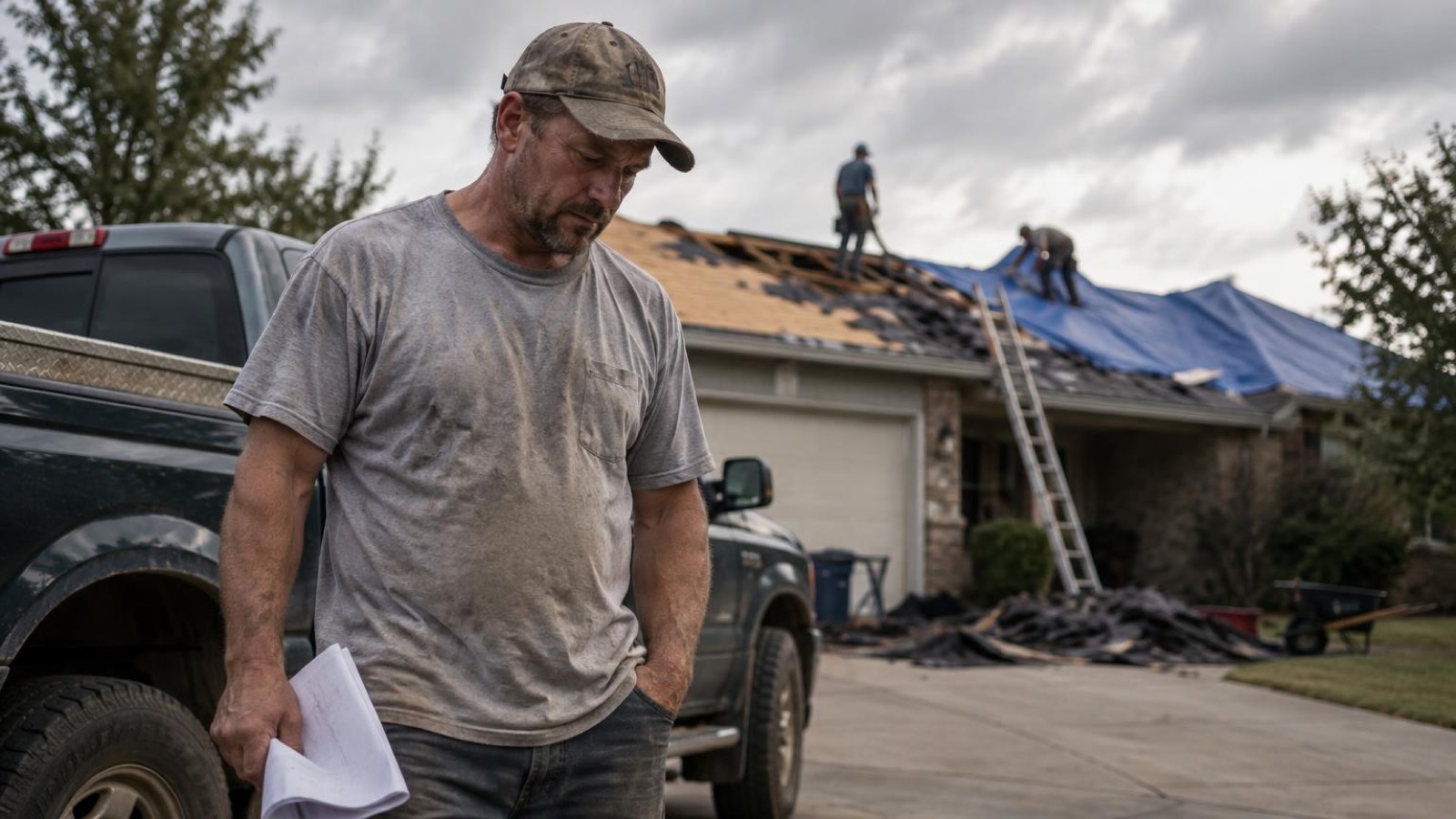
Contractor Costs Jumped Nearly 9% — and Roughly 30% of Project Volume Was Delayed, Stalled or Canceled
 Business
Factories Are Selling Around Their Dealers. Here's the Wake-Up Call for Your Sales Team.
 Business
Night Leads Go Cold by Morning — and Longer Hours Won't Fix It
 Business