Your Crew Copies the Boss, Not the Poster. A Dallas Safety Director Explains.
A Dallas safety director says crews follow foremen, not posters. What that means for dealers and their sales floors.

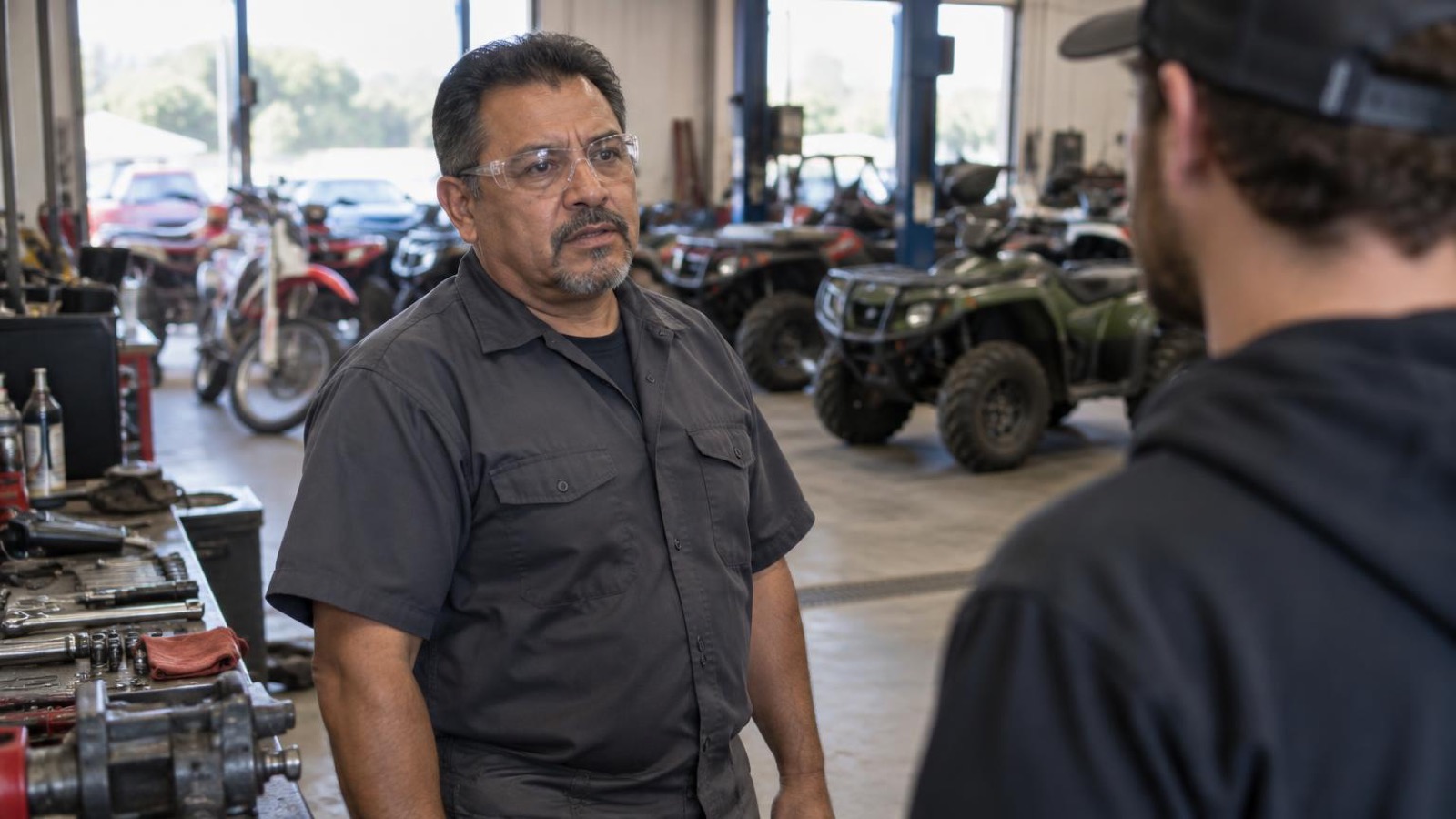
Luciano Perez is the safety director at Dallas-based Kpost Companies, and his job is getting roofing crews to work safely. His lever is not the safety poster. It is the foreman standing next to them. He says respect and leadership people follow do what a policy binder cannot.
The poster is not what moves a crew
The piece ran in Roofing Contractor on Oct 30, 2026, compiled by the magazine's editor-in-chief, Art Aisner. It turns the floor over to Luciano Perez, the safety director at Dallas-based Kpost Companies.
His day job is breaking through the barriers crews sometimes put up on a roofing jobsite. The barrier has a name in the piece: the machismo effect. Getting past it on a roofing crew takes respect, an understanding of the culture, and leaders people actually follow.
Confronting it head-on, or dismissively, usually backfires. Perez is not asking anyone to throw away their pride. He wants it pointed at protecting one another instead.
That is not soft talk. Plenty of workers take pride in being tough and in getting the job done. So he frames safe behavior as "the mark of a true professional".
Then the line that should stop a dealer cold. A crew takes its cues from the foreman and the senior hands it respects, not from a policy binder or a poster on the wall.
When the senior people clip in, put on their gear and talk about safety out loud, the rest of the crew can follow without losing face.
Family sits under all of it. Family carries real weight in many Latino cultures, and reminding a worker that an injury hits his ability to provide for his family makes the whole thing personal instead of abstract. That is where his line about "real strength is going home uninjured every day" lands.
Questions are the other half. Machismo can leave a worker slow to ask a question or admit he is not sure, so he pushes small group talks and one-on-ones, and praise for whoever raises a concern. Unsafe acts get corrected respectfully and privately. Public embarrassment, he says, teaches the crew to stay quiet and take more risks.
Perez puts it this way: "Respect builds trust, and trust breaks down the need to “prove toughness.”" That is the whole method in one sentence.
His close: once safety is sold as professionalism, as leadership, and as care for the family and the crew, that same pride starts pushing people toward safer work.
Now take the word safety out of that article. What is left runs a sales floor.
Why the usual approach backfires
The default move when something goes wrong is to name it in front of the whole group. Perez says naming it head-on, or brushing it off, usually backfires.
Public embarrassment does the opposite of what a manager wants. It pushes people to stay quiet and take more risks.
And if the culture leaves people shy about asking a question or saying they are not sure, the ones who most need help are the least likely to say a word.
My read: what you end up with is a floor that looks calm and answers nothing. Nobody is lying to you. They just stopped volunteering.
So what carries the weight? The senior people in the room. Which is where this gets uncomfortable for an owner.
What this looks like at a powersports or golf cart store
From here down, this is my read, applied to your business.
Picture a powersports store with five salespeople, a Saturday ride event and a line at the parts counter. The manager wants every trade-in walked around with the customer, outside, next to the unit.
He says it in the Monday meeting. Then Saturday hits, three people are waiting, and he gets through his own up without the walk-around. The team just watched the foreman. In my experience that is the moment the walk-around becomes a slow-day idea, and no memo brings it back.
Picture a golf cart dealer with a smaller bench: an owner, two reps, and a delivery driver who sets up every cart before it rolls. The owner wants a call to every buyer the day before delivery.
He can say it every week. Or the senior rep can make that call from the desk next to him, out loud, while the new guy listens. One of those two builds a habit.
Perez ties safe behavior to a man going home to his family. On a sales floor the same move works on pay, and on not getting chewed out by a customer at 6pm. My read: your rep protects whatever you connect the habit to, so connect it to something real.
And the correction matters as much as the praise. If the only time the team hears about a missed walk-around is in front of everyone, you have taught them to hide the next one.
Here is the part you can run this week.
How to run this in your store this week
- Name one behavior. Not five. Write the single thing you want repeated on an index card: the trade-in walk-around, the day-before delivery call, the second follow-up. Ten minutes. If the card needs a paragraph, you are still carrying two behaviors.
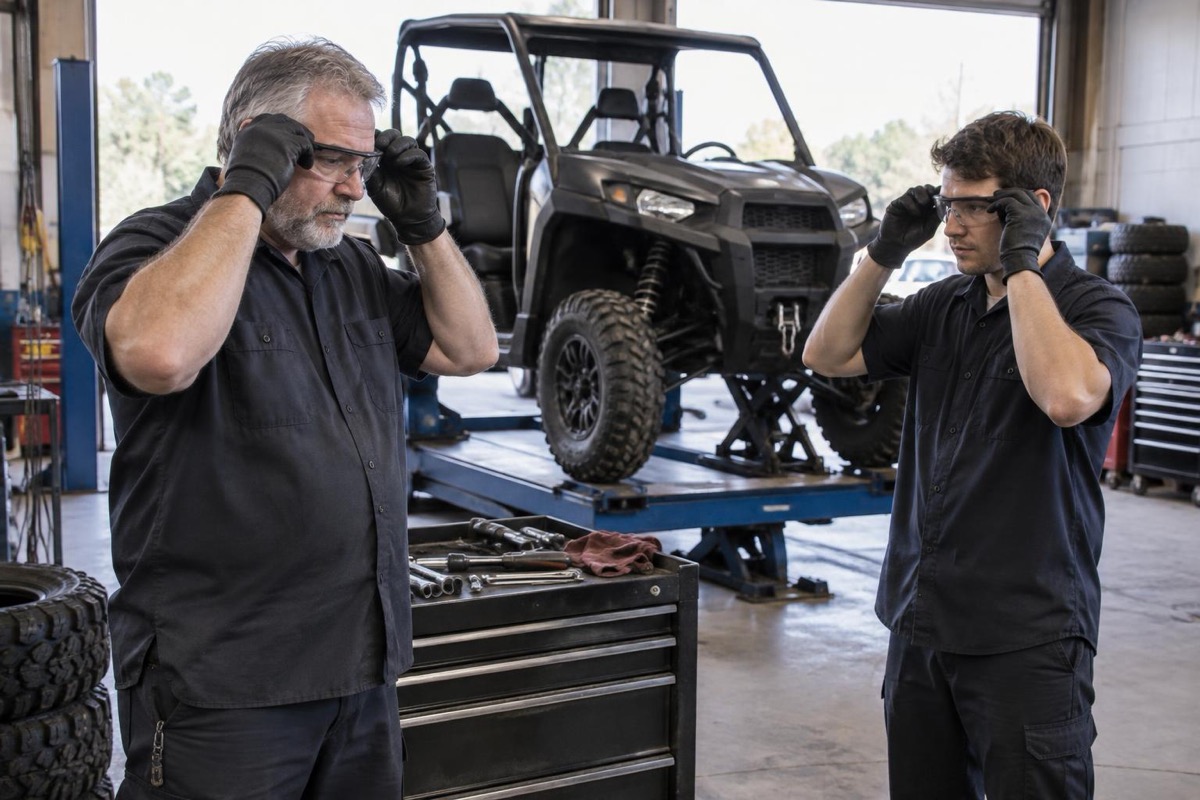
- Do it yourself this week, where they can see it. Take the first up of the day and run the walk-around with your own customer. Perez puts the weight on senior people who do the thing in the open. Your floor watches what you do with a customer on a busy Saturday, not what you said Monday.
- Pick your foreman, and pick carefully. It is the senior salesperson the others actually respect, which is not always your top board. Put the behavior in that person's hands and say why out loud.
- Run a ten-minute huddle that asks instead of tells. Small group talks are where Perez wants questions raised. Keep it short, and make it safe to talk.
Powersports huddle: Before we open, who got a question this week they could not answer fast enough? Say it out loud. Nobody is in trouble. I want the list.
- Praise the person who raises a problem, and correct the miss one-on-one. That is Perez's split: praise the concern, correct the act respectfully and privately. My read: the first time you do it, the room will test whether you meant it.
Golf cart one-on-one: You flagged that delivery date. That is exactly what I want from you. Walk me through what you saw and who else needs to hear it.
- Frame it around what they go home to. Perez leans on family because it is a powerful motivator for those crews. For your team it might be commission, or a clean end to the day. Say the connection out loud instead of assuming they made it.
- Check the front door too. Everything above happens after the customer is standing in front of you. My read: most of them meet your business first in an ad or on your website, before anyone gets a chance to run a walk-around.
Before Monday, type this into your notes: Three things a first-time buyer sees in the first ten seconds on our site. Three questions every buyer asks on the phone. The gap is the next ad.
Mistakes that kill it
- Correcting the miss in front of the group. Perez says getting called out in public only teaches the crew to stay quiet and take more risks. My read: you lose the next honest question, and that costs more than the miss.
- Turning it into a memo or a poster. The whole article is about how little those move a crew. You are the lever, or nobody is.
- Handing it to the wrong foreman. If the senior person on your list cuts the corner, the room learns the corner is fine.
- Running it for a week. One huddle is an event. A season of them is a habit.
Free 30-minute review of your ads, website and setup.
Disclosure: Brandon Correll founded SalesBeast, which is mentioned and advertised on this page. Facts are drawn from the linked sources; analysis and advice are his opinion.
Brandon Correll founded SalesBeast. Over $75 million in online sales, built two companies to eight figures, and built multiple 8-figure sales teams.
 Business
36% of School Districts Flagged Air Problems in at Least One School. Contractors Push Ahead No Matter Who Wins
Keep reading
 Business
More Than Half of Campers Quit a Booking. Dealers, Check Your Phone
 Business
75% of Shoppers Say They'd Try a New Store. Most Owners Don't Plan to Ask for an Email.
 Business
76% Expect a December Rate Hike. Boat Dealers, Read This
 Business
79% of Consumers Had Under $1,000 Set Aside for the Holidays — Your Bills Didn't Wait
 Business
86,000 Jobs Added in October — and the Bigger Raises Went to Job-Changers
 Business