More Than Half of Campers Quit a Booking. Dealers, Check Your Phone
More than half of campers quit when nobody answered or the online booking would not go through — and for a dealership, my read is that the phone has the same leak.


In the past year, more than half of U.S. campers walked away from a booking. That is 57% of the campers in the survey. The reason: they could not get hold of anyone and could not finish the booking online, according to a new report from Storable Newbook. If you sell powersports or golf carts, my read is that your phone has the same leak.
More Than Half of Campers Quit a Booking Last Year
The number is 57%. A new report from Storable Newbook found that more than half of the campers it surveyed walked away from a booking at some point in the past year. Their reason: they could not get hold of anyone and could not finish the booking online. The report is called The State of RV, Campground and Outdoor Hospitality. Storable Newbook is a company that makes software for campground management.
The findings come from a survey of 968 U.S. adults that ran in September 2026. Each person had stayed at a campground, an RV park or a glamping site in the past year.
The path from wanting a site to booking one had a hole in it.
Storable Newbook makes campground management software, so you can say they have a dog in this fight. Fair enough. But this is not a focus group. These were people who had stayed at a campground, an RV park or a glamping site in the past year. 98% planned to camp again.
And the demand did not go anywhere. That is the part that should worry you.
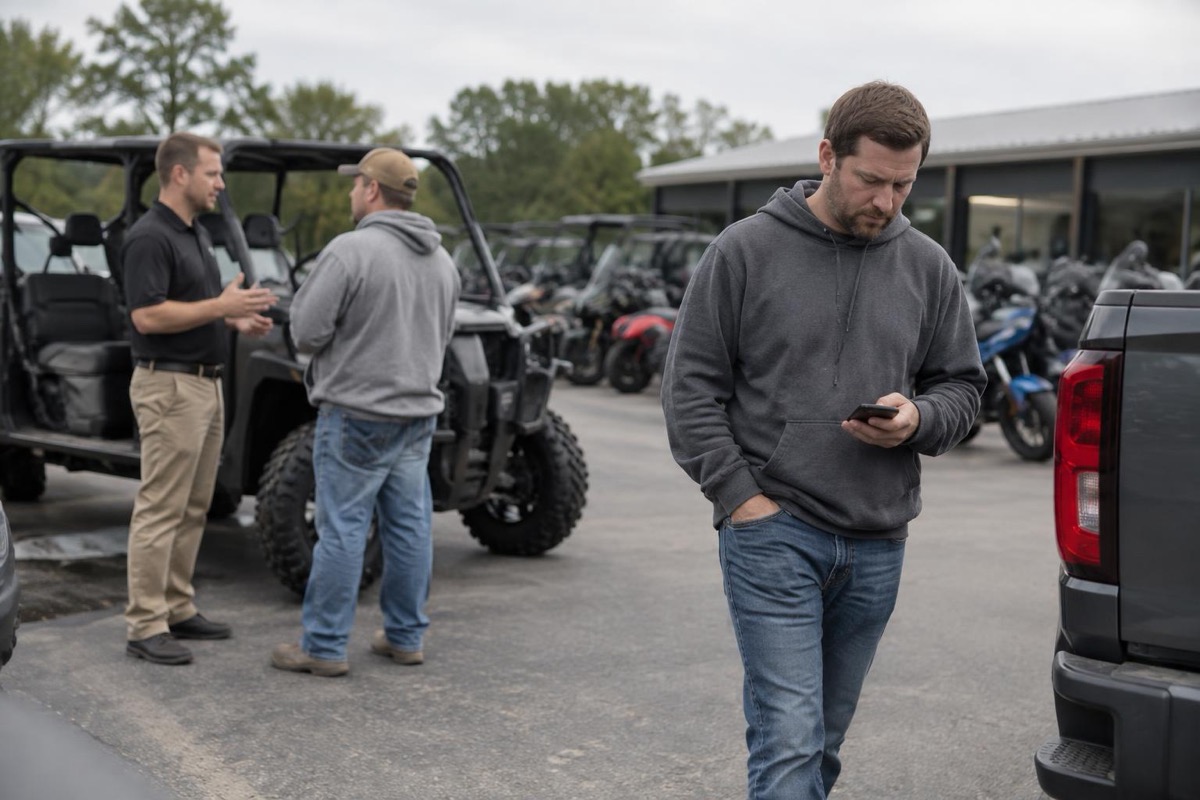
The Demand Did Not Drop. The Booking Did.
98% of them say they will camp again within the next year, and 77% have two or more trips planned. Same report, same survey, same group of people.
So you have a market where nearly everyone plans to camp again, and more than half of them walked away from at least one booking attempt last year. My read: that is not a demand problem. That is an answering problem.
Blake Burris, director of Enterprise North America at Storable Newbook, said the research shows the points where guests stall or choose a different park. He said parks now have something specific to fix before next season.
He is talking about campgrounds. My background: Over $75 million in online sales, built two companies to eight figures, and built multiple 8-figure sales teams. I read his words as a warning label for anyone who sells something with a motor and a price tag on it.
Where the Guest Actually Gets Stuck
Tom Mason, COO at IVEE Management Group, named the basics. Guests want to know what is open, see the whole price, and book directly on the park's site whenever they are ready. He said that when a park nails those basics, guests have fewer reasons to shop elsewhere.
The report also shows how campers pick between parks. The report lists cleanliness as the top reason at 69%, with facilities at 56% and ratings and reviews at 53%. Just 12% said a well-known brand name mattered.
My read on the ranking: cleanliness at 69% beats ratings and reviews at 53% because people trust what they can see and touch. And they still need a human to tell them yes, we have it, here is the price, here is when you can have it.
My read: some of them book somewhere else. Nobody calls to tell you why.
In my experience, that exact thing happens on a dealership floor every single weekend.
What This Means for a Dealer Who Sells (My Read)
This part is my read, not the report's. The report is about campgrounds. But the leak it describes is the same leak I have watched drain money out of dealerships for years.
Picture a powersports dealership on a Saturday. Four people on the floor, one person covering the phone. A guy finds a side-by-side online at 8 p.m., fills out the form, and waits. Nobody answers until Tuesday morning. By then he has put a deposit down somewhere else. He does not call back to tell you why. He just stops. That is the 57% wearing a different uniform.
Picture a golf cart dealer outside a retirement community. A homeowner wants a cart before the season starts. She calls twice on a Thursday and gets voicemail both times. She drives twenty minutes to the next dealer, who answers on the second ring. She buys there. Nothing about your cart was wrong. Your phone was.
Here is the math I would want every owner to run. Take last month's leads. Count the ones that came in after 5 p.m. or on a Sunday. Now count how many got a real answer inside an hour. The gap between those two numbers is your version of 57%.
One more thing worth noticing, and this part is my read. My guess is that plenty of the people booking campsites also shop for side-by-sides, ATVs and golf carts. 98% of them say they will camp again within the next year. If a park does not answer, my read is that they probably do not stop camping. They book elsewhere, and they buy their toys from whoever answered first.
How to Use This Number This Week
- Pull your missed-call log. Open your phone system or your cell's recent calls and look at last month. Count every call that came in after 5 p.m., on a weekend, or while your team was with a customer. Write the number on a sticky note and put it where you can see it. Twenty minutes, tops.
- Call ten of them back today. Not a text. A call. Say who you are, say you missed them, and ask what they were looking at. Then tell them right away whether you have it and what it takes to get them on it.
- Write your first-response rule and post it where the team can see it. Every web lead gets a call within 15 minutes during open hours, and a text within 5 minutes after close. If you do not write the rule, your team invents a new one every day.
- Text every after-hours lead the same night. Short, no pitch, one question. Tell them who you are, name the unit they asked about, say you will call first thing in the morning, and ask if they want it held.
- Check where your leads actually land. If web form leads go to one inbox, Facebook messages to another, and texts to a third phone, you do not have a lead problem. You have a plumbing problem. Fix the plumbing before you spend another dollar on ads.
- Ask one question at the Monday meeting. Who did we not get back to last week? Then watch the room. The quiet tells you more than any report can.
- Write your follow-up once and reuse it. If you want a head start, ask an AI tool for three short follow-up texts a golf cart dealer could send to a lead who filled out a form and never got a call back. Friendly, no pressure, one question each, under 40 words.
Do steps 1 through 3 this week. That is it. You will find money you already paid for.

Mistakes to Avoid
- Do not buy more leads before you answer the ones you have. More traffic into a leaky bucket just makes a bigger puddle.
- Do not let a call back three days later count as a call back. In this market, a day late is a customer gone.
- Do not put one person on the phone and call it a process. One person is a bottleneck with a name.
- Do not treat the online form as a lesser lead than the walk-in. The camper who books on the website is the same buyer who walks your floor.
Built for the Gap This Report Describes
Everything above is a process problem. In my experience, the fix is usually a tool problem.
That is the kind of gap we work on.
If more than half of buyers walk away over a missed connection, the cheapest win in your store this month is not a bigger ad budget. It is making sure the phone gets picked up and the form gets answered. Take a look when you are ready.
See SalesBeast CRMOpens salesbeast.com
Disclosure: Brandon Correll founded SalesBeast, which is mentioned and advertised on this page. Facts are drawn from the linked sources; analysis and advice are his opinion.
Brandon Correll founded SalesBeast. Over $75 million in online sales, built two companies to eight figures, and built multiple 8-figure sales teams.
 Business
36% of School Districts Flagged Air Problems in at Least One School. Contractors Push Ahead No Matter Who Wins
Keep reading
 Business
75% of Shoppers Say They'd Try a New Store. Most Owners Don't Plan to Ask for an Email.
 Business
76% Expect a December Rate Hike. Boat Dealers, Read This
 Business
79% of Consumers Had Under $1,000 Set Aside for the Holidays — Your Bills Didn't Wait
 Business
86,000 Jobs Added in October — and the Bigger Raises Went to Job-Changers
 Business
900,000 Dealer Leads: Only 2 of 12 Paid Lead Sources Beat 4.5%
 Business