36% of School Districts Flagged Air Problems in at Least One School. Contractors Push Ahead No Matter Who Wins
A contractors' group says it will push new air-quality legislation and keep pressing lawmakers on apprenticeship policy no matter who wins, with prompt-payment measures on its state agenda.

A contractors' group just laid out its plan for the next Congress, and its leaders said the priorities stay the same either way. SMACNA, the sheet metal contractors' association, said it will push air-quality legislation in the next Congress and keep pressing lawmakers on apprenticeship policy and on federal funding.
What the group actually put on the table
SMACNA used a pre-election briefing to lay out its next-Congress plans. The group said it will pursue air-quality legislation in the next Congress. It also plans to keep pressing lawmakers on apprenticeship policy and on federal funding. Its leaders said that agenda does not change based on which party holds Washington.
Stan Kolbe, the group's executive director of government and political affairs, said SMACNA will renew a push for school air-quality legislation. He also pointed to tax incentives for commercial-building air assessments and improvements. "We have a meeting right after the election," Kolbe said. He said SMACNA will work with lawmakers to bring the measures back when the next Congress opens, and he called the package bipartisan.
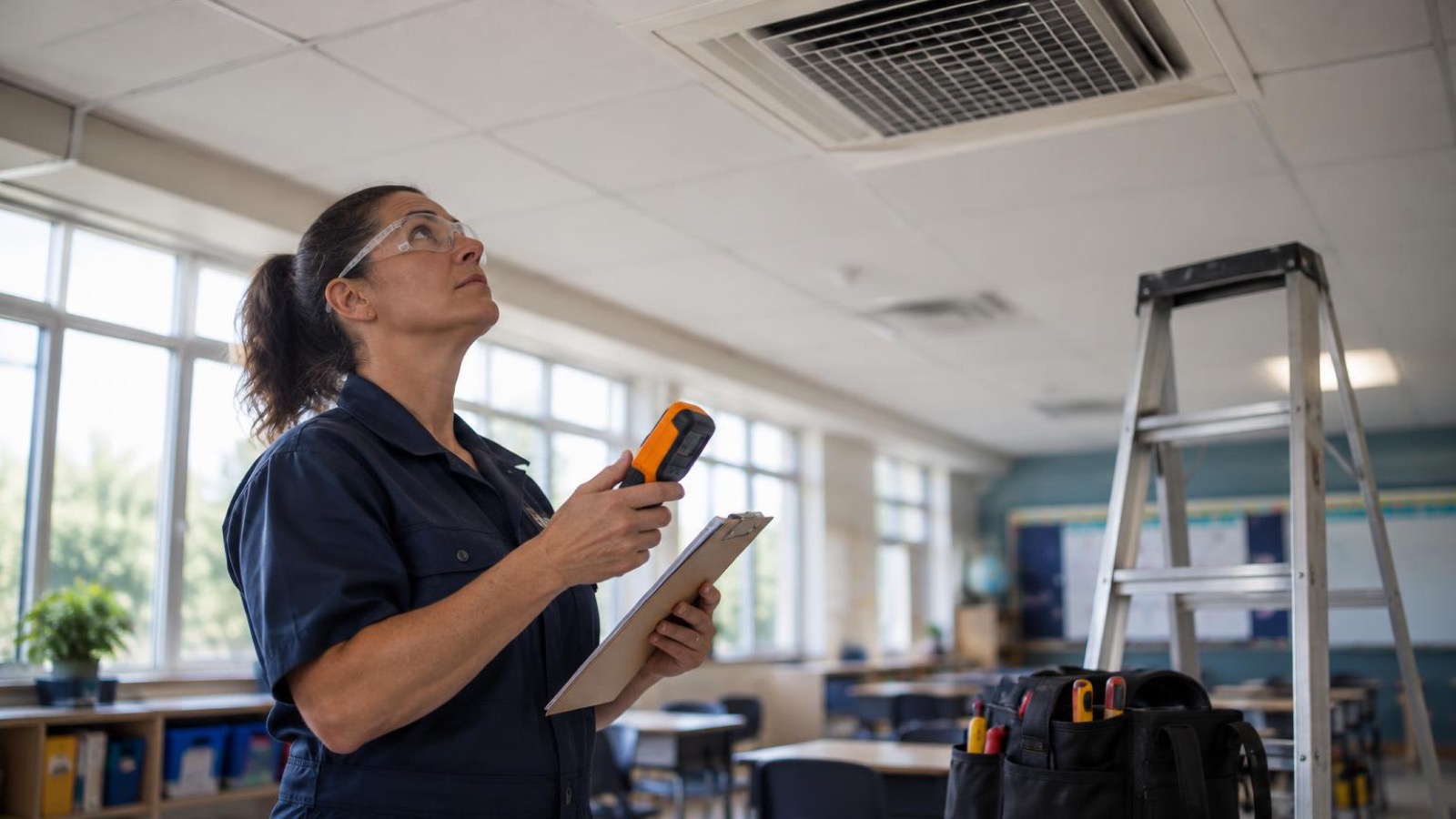
Then there is the number that should get your attention. SMACNA CEO Frank Wall made the case for stronger school air-quality policies in a DC Journal opinion piece titled "How Healthy Is the Air in Schools?" Wall cited a Government Accountability Office review: 36% of districts flagged ventilation or air quality trouble in at least one school during 2024-25, while 13% said the problems were chronic.
Wall backed the Indoor Air Quality and Healthy Schools Act, a bipartisan 2025 bill. The bill would set voluntary guidelines based on science for indoor contaminants and expand the EPA's school IAQ work through assessments, technical assistance and guidance.
That is the air-quality side. Two other pieces affect how contractors get paid and how long a job can sit.
Jared Karbowsky, SMACNA's government and political affairs director, said the group worked with training and labor partners on comments. Those comments asked how revised federal requirements would line up with state standards and current apprenticeship programs. He also raised concerns about changes that would let political appointees play a bigger part in deciding competitive federal grants.
He warned that extra political scrutiny might derail work once a contractor has already put money, workers and engineering into a project. He said such worries mainly concern competitive grants rather than formula-based programs or statutorily mandated funding.
On the state front, Denise Murphy McGraw, a special assistant at SMACNA focused on political affairs, said the list covers indoor air quality, prompt-payment requirements, apprenticeship initiatives, workforce matters and capital funding. She said the association will review election outcomes to gauge their impact on legislative goals in each state.
Why this is landing right now
The briefing happened before the election, and the group's message was simple: the work continues either way. SMACNA plans to reintroduce its measures when the next Congress starts. The package is described as bipartisan.
That matters for you because the push is not waiting on a winner. The group already has a meeting booked for right after the election. And the state-level agenda is moving in parallel — state efforts often test what later becomes federal policy.
My read: the practical action is local first. If prompt-payment or IAQ measures move in your state, you feel it before any federal bill passes.
What it means for an owner who sells
Here is where I put on my sales-floor hat. Two scenarios, one for each of your worlds.
Picture a mechanical or HVAC contractor with a commercial project in the pipeline. The job leans on a competitive federal grant. Karbowsky's worry is that added political review could hold up a project after you have already put money, crews and design work into it. That is your cash and your crew's schedule sitting in limbo. Those worries apply mainly to competitive grants, not to formula-funded programs or funding set by statute. So the first thing you need to know is which bucket your project is in.
Picture a remodeling contractor who does ventilation or IAQ work. My read: the renewed push for school air-quality legislation and tax incentives for commercial-building air assessments could open work in schools and commercial buildings. The demand signal is already there: 36% of districts reported ventilation or air quality trouble in at least one school in 2024-25, and 13% reported chronic problems. But the bill would set voluntary guidelines. The work comes when a district or a building owner decides to act — which means your phone call is the trigger.
Now add prompt-payment measures to the picture. Those are on the state agenda. If you do commercial or school work, how fast you get paid decides whether you can take the next job. That is not a policy debate for you. It is a cash-flow question.
How to use this week
- Open your state contractors association's site and find the legislative or advocacy page. Look for prompt-payment or IAQ measures listed for your state. Fifteen minutes, tops.
- Call the association and ask one question: what is moving on prompt payment this session? Write down the bill number and who is sponsoring it.
- Pull your last three commercial contracts. Highlight the payment terms. If the terms run long, note it next to the job. That is your real exposure.
- If you are bidding a job that touches a federal grant, ask the owner or general contractor in writing whether the award is competitive or formula-funded. Those worries apply mainly to competitive grants.
- Remodeling contractors: list five school districts or commercial buildings within 30 miles. Check whether any published an IAQ or ventilation assessment in the last year. That is your call list for the week.
- Mechanical and HVAC contractors: list every project in your pipeline that touches a federal grant. Mark which ones are competitive. Add a short line to your proposal about timeline risk if extra review is added.
- Use these scripts. Copy them, fill in the blanks, send them.
Mechanical contractor script: Hi [name], quick question on the [project] — is the funding a competitive federal grant or a formula program? I want to flag timeline risk before we lock in equipment and labor.
Remodeling contractor script: Hi [name], I saw the district reported ventilation issues in at least one school last year. We do IAQ assessments and improvements. Can I send you a one-page summary?
Follow-up script for both: Hi [name], just checking the payment terms on the [project] are still what we agreed. I am planning labor and want to keep the schedule tight.
Mistakes to avoid
- Do not assume any of this is law yet. SMACNA's plans, its comments on proposed apprenticeship changes, and the bill it endorsed are not a final rule.
- Do not treat competitive grants and formula funding as the same thing. There is a clear line between them.
- Do not wait for the election results to call your state association. State efforts are often the testing ground.
- Do not bid a grant-funded job without asking, in writing, how the award is funded. Your money, crews and design commitments are on the line.
Free 30-minute review of your ads, website and setup.
Disclosure: Brandon Correll founded SalesBeast, which is mentioned and advertised on this page. Facts are drawn from the linked sources; analysis and advice are his opinion.
Brandon Correll founded SalesBeast. Over $75 million in online sales, built two companies to eight figures, and built multiple 8-figure sales teams.
 Business
More Than Half of Campers Quit a Booking. Dealers, Check Your Phone
Keep reading
 Business
75% of Shoppers Say They'd Try a New Store. Most Owners Don't Plan to Ask for an Email.
 Business
76% Expect a December Rate Hike. Boat Dealers, Read This
 Business
79% of Consumers Had Under $1,000 Set Aside for the Holidays — Your Bills Didn't Wait
 Business
86,000 Jobs Added in October — and the Bigger Raises Went to Job-Changers
 Business
900,000 Dealer Leads: Only 2 of 12 Paid Lead Sources Beat 4.5%
 Business