Two Veteran Contractors Say the Trade Got Better. One Bill Got Heavier.
Two longtime contractors say the trade is better than it was in the 2000s — and one of them names the bill that grew right along with it.

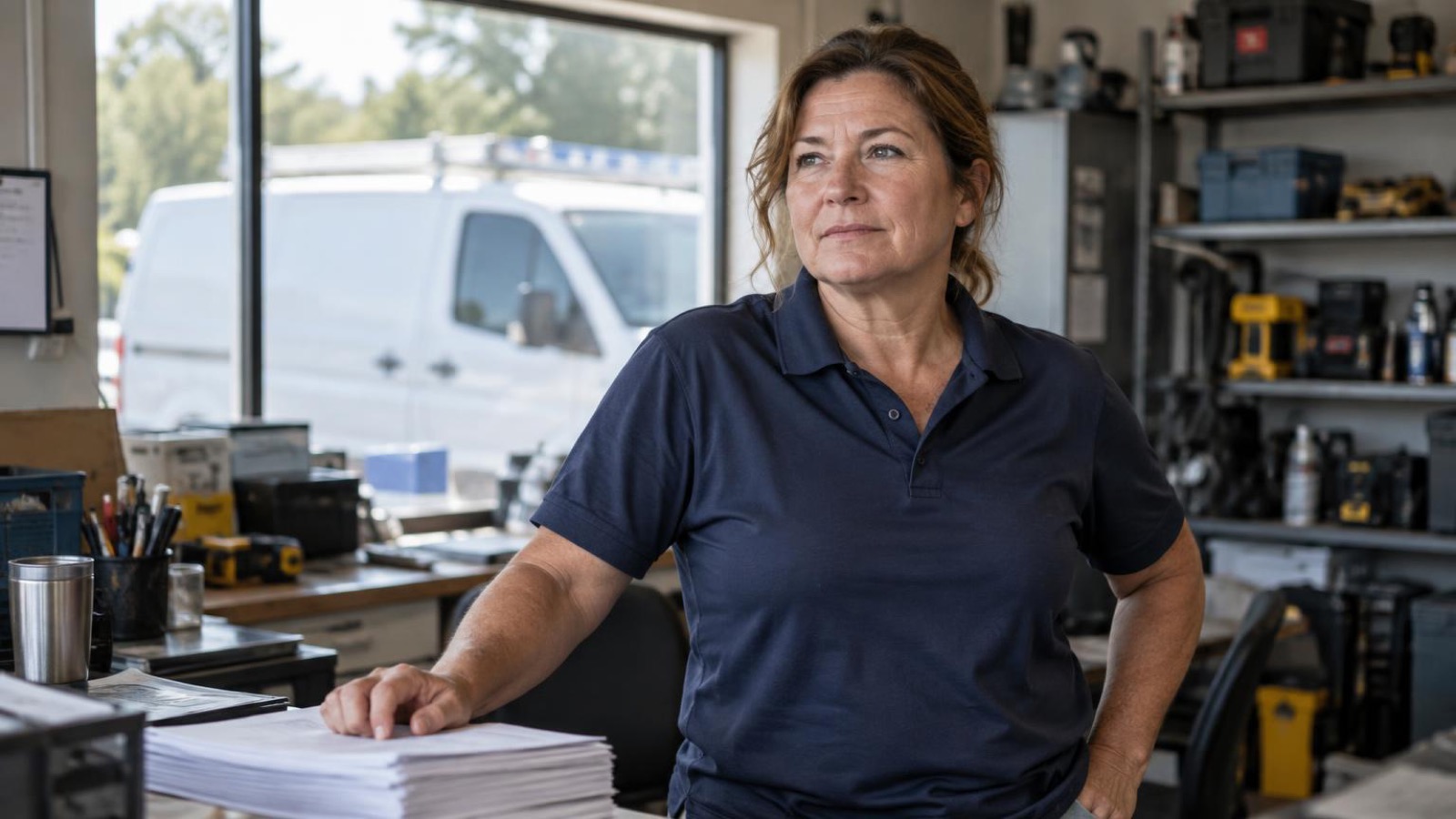
Two contractors who worked the 2000s just said the trade is better now (ACHR News). Better equipment, better information, customers with answers in hand (ACHR News). Then one of them named the bill that grew with it (ACHR News).
Two contractors looked back 20 years. Here's what they said got heavier.
Joanna Buglewicz and Scott Merritt both worked in home HVAC during the 2000s. She handled admin at her family's company and sometimes did duct-cleaning work in the field. He ran his own shop (ACHR News).
Buglewicz is now president and owner of Green Valley Cooling & Heating, based in Green Valley, Arizona. Merritt sold Fire & Ice Heating and Air Conditioning, a Columbus, Ohio company, last year. He is a co-founder of Honest Fix Heating, Cooling, and Plumbing, which is based in Steubenville, Ohio. He also works as a marketing strategist focused on AI and answer engine optimization (ACHR News).
Both say the residential HVAC trade is a better business now than in the 2000s (ACHR News). That is the headline they gave. Much of what follows is about what got harder on the way there.
Merritt's reason is the customer. Homeowners now carry the answers with them, he said: "they now have information at their fingertips" (ACHR News).
Buglewicz's reason is the workplace. She pointed to more awareness of shop culture, employee well-being and basic respect, and said those changes make the industry one she is glad to help shape (ACHR News).
Then she names the part that got heavier. In the 2000s, she said, the toolbox was mostly direct mail, radio and TV. Her shop now also runs social, search, streaming ads, online quote tools and more channels (ACHR News). "Both the cost and the demands of the marketing mix have grown significantly," she said (ACHR News).
That one line is the whole article for anyone who signs the ad checks. It also points to what I would check first.

The equipment got better. The customer got smarter. The selling got noisier.
Buglewicz named three big shifts since the 2000s: paper files moving to digital, better equipment, and technical answers that are easier to find (ACHR News). Training back then meant a class in person, or a CD or DVD you bought. Tests were done with pencil and paper (ACHR News). Today a tech can look up a question in Google, watch a demo on YouTube, or ask an AI tool (ACHR News).
Merritt pointed to the variable-speed motor, plus smart thermostats, as the biggest technical change of the past 20 years, in his view. He said it changes comfort, utility use and humidity (ACHR News). He is nostalgic about the early 2000s standards — 10 SEER equipment and R-22 refrigerant. He also recalled that after 2006 began, training on SEER 13 had to reach a high level (ACHR News). Customers gained comfort and efficiency, he said, but systems also got more delicate and break down more easily without maintenance (ACHR News).
His view on the buyer side: homeowners get more comfort, more efficiency and more choices, and AI now helps them compare one option against another (ACHR News).
The homeowner changed with the equipment. In Green Valley's service area, evaporative coolers were common 25 years ago; now they are rare, she said, because homeowners want steady comfort and more control indoors (ACHR News).
So the equipment improved, the information improved, and the customer got all of it too. My read: that is part of why the selling got louder and costlier. Buglewicz's own summary: "Technology has improved so much, but it has also added multi-layer complexity" (ACHR News).
What this means for an owner who sells (my read)
Everything below is my opinion, not from the interview.
The pattern isn't HVAC-only. Any contractor selling to a homeowner is now selling to somebody who did homework first. Here is how I see it landing in two businesses.
Picture a remodeling contractor with two crews. The homeowner has already watched a walkthrough video, filled out two online quote builders, and read your reviews before your rep pulls in the driveway. Your rep opens with a speech about the company and the homeowner is three questions ahead. My read: the close moved earlier. It now happens in the quote builder and on the first phone call, not at the kitchen table. If your quote builder is slow or your first call rolls to voicemail, you lose the job before anybody shakes hands.
Picture a solar installer running five channels. Streaming ads, search, social, a quote builder, and a direct mail piece somebody talked you into. Buglewicz's line about cost and demands growing is your monthly P&L (ACHR News). The problem usually isn't one bad channel. It is that nobody in the shop can say which channel produced the last ten appointments. My read: most solar companies don't have a lead problem. They have a can't-tell-which-half problem, and they answer it by buying more leads.
Picture either one of them hiring. A new rep comes in and the first thing they are handed is a price sheet. The homeowner they are about to meet has already compared three systems online. The rep needs the comparison answers, not the price sheet. That is a training problem, and it is cheap to fix.
Picture the service side of either business. Merritt said the newer systems fail more easily without maintenance (ACHR News). My read: that is a recurring-revenue door most shops leave half open, and it is easier to sell to a customer you already installed for than to a stranger.
How to use it this week
None of this takes a budget. It takes an afternoon.
- Fill out your own quote builder on your phone. Open the online quote tool on your site and go through it as a homeowner would. Time it. If it drags, or asks for something a nervous homeowner wouldn't hand over, that is your first fix. Buglewicz lists online quote builders as part of the modern marketing mix, so it is part of what you already pay to run (ACHR News).
- Search your service and your town on Google. Look at the first page the way a homeowner would. Note who shows up, what they promise, and whether your shop is in the conversation. Merritt's point about answers at the customer's fingertips starts here (ACHR News).
- Watch the first few YouTube videos a homeowner would find for your job. Write down the three claims those videos make. That is the script your rep is up against. Technicians can research a question by watching a YouTube demonstration (ACHR News).
- List every channel you pay for with the monthly number next to it. Social, search, streaming, direct mail, radio, TV, quote builder. Buglewicz named social, search, streaming ads and quote tools as today's mix, on top of the direct mail and broadcast that mostly made up the list in the 2000s (ACHR News). Seeing that on one page usually exposes the line nobody can defend.
- Write the three answers your best rep gives on a first call. Not the pitch. The three questions homeowners ask before they will book. Say them out loud and time it. If it runs long, cut it.
- Put those answers in front of every lead before the appointment. Text, email or a one-page PDF. The goal is to arrive as the person who already answered, not the person who showed up to explain.
- Pick one channel to fix this month, not five. The source of this whole article is a contractor saying the mix got broader and more expensive (ACHR News). Broad is the problem. Narrow is the fix.
If you want help writing the scripts, here are three prompts you can paste into whatever AI tool you already use. Fill in the brackets.
- Ask it for five questions a homeowner should raise before signing a kitchen remodel contract, plus a short answer a good contractor would give to each. Cap each answer at 40 words.
- Paste your best first-call script and ask for a rewrite at a sixth-grade reading level in 120 words. Tell it to keep every number you gave and add none.
- Paste three real customer questions and ask for a one-page pre-appointment email in plain language that ends by asking the customer to confirm the time.

Mistakes to avoid
- Adding a channel because it is cheap. Buglewicz's point is that the mix got broader and the cost and demands grew with it (ACHR News). A cheap channel still costs you the attention of whoever runs it.
- Blaming the leads. If your quote builder is slow and your first call rolls to voicemail, better leads just leak faster.
- Training reps on the price sheet. My read: the homeowner already has prices. What they don't have is a reason to pick you.
- Reading a better business as a compliment. Both contractors said the trade is better now (ACHR News). Better is not the same as easier.
The next step: check your own setup first
Here is where I would stop guessing.
If that marketing paragraph made your stomach tighten, that is a signal worth acting on, and you are not stuck. My read: the fix is rarely a bigger budget. It is knowing which thing to fix first.
Start with your own quote builder on your phone. Then record your first call. Then put every channel on one page with its monthly number. Fix the leak before you buy another channel to cover it. That order costs nothing, and it is the one I would follow.
Get my free Game PlanFree 30-minute review of your ads, website and setup.
Disclosure: Brandon Correll founded SalesBeast, which is mentioned and advertised on this page. Facts are drawn from the linked sources; analysis and advice are his opinion.
Brandon Correll founded SalesBeast. Over $75 million in online sales, built two companies to eight figures, and built multiple 8-figure sales teams.
 Business
36% of School Districts Flagged Air Problems in at Least One School. Contractors Push Ahead No Matter Who Wins
Keep reading
 Business
More Than Half of Campers Quit a Booking. Dealers, Check Your Phone
 Business
75% of Shoppers Say They'd Try a New Store. Most Owners Don't Plan to Ask for an Email.
 Business
76% Expect a December Rate Hike. Boat Dealers, Read This
 Business
79% of Consumers Had Under $1,000 Set Aside for the Holidays — Your Bills Didn't Wait
 Business
86,000 Jobs Added in October — and the Bigger Raises Went to Job-Changers
 Business