Trane and American Standard's New Kit Puts 8 Sensors on the HVAC System. Here's What It Means for You
A new kit watches a home's HVAC equipment and sends the owner an update every 10 minutes. That changes what customers expect from you.

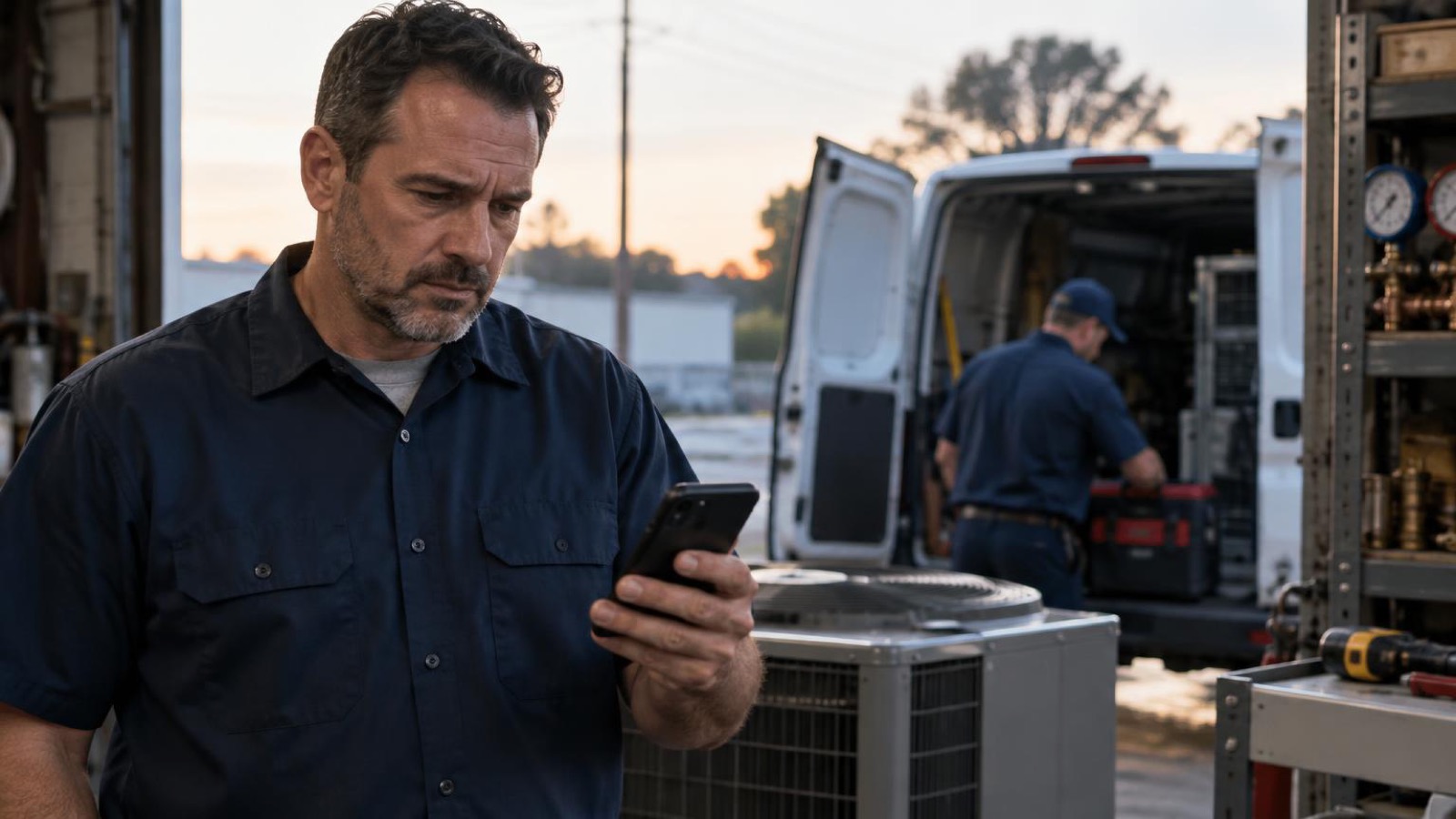
Trane and American Standard have introduced a kit that watches existing heating and cooling systems with eight sensors, and the homeowner gets an update every 10 minutes. The dealer can check the same readings before a service call. If you sell boats or remodel homes, here is why that matters to your week.
Trane and American Standard Introduce a Watchdog for Existing Equipment
Trane and American Standard introduced an HVAC Performance Monitoring Kit that lets a dealer watch and diagnose a system that is already installed. The kit works on virtually any 24-volt noncommunicating system, whatever the brand or age, including single-stage, two-stage and multispeed units. Eight sensors and system algorithms watch how the equipment runs and can warn the owner and the dealer when readings shift in ways that may point to a problem ahead.
It tracks temperature, pressure, airflow, how the electrical side is behaving, and the system's overall health (ACHR News). The HVAC Performance app pushes an update to the owner every 10 minutes. It runs on a cellular signal, so it does not need the home's Wi-Fi or a smart thermostat. The app shows health indicators, filter alerts based on condition, and a connection to the owner's dealer (ACHR News).
On the trade side, a dealer can review the system remotely before a service call. One dashboard shows which systems are reporting critical issues (ACHR News). And the same readings give the dealer something concrete to point at when talking maintenance, repair or replacement.
Think about what that changes on a Tuesday morning. My read: a dealer can look at a screen, see which systems are reporting critical issues, and decide who gets the first truck (ACHR News). My read: the customer is already looking at his own version of that picture on his phone.
Now, the fair question. You sell boats. You remodel kitchens. Why spend five minutes on an HVAC kit?
Because the interesting part is not the hardware. It is the clock.

What Trane Says the Kit Is For
Noah Gates, product manager for thermostats and home app at Trane Technologies, said most homeowners have "little visibility into how their HVAC system is performing" until an emergency repair is needed. He said the kit creates "a continuous connection between homeowners, their equipment, and a trusted HVAC professional".
My read: what he is selling is not a better furnace — it is a relationship where the professional speaks first.
The kit also works on virtually any existing system, regardless of manufacturer or age (ACHR News). That tells you who it is aimed at: the equipment already sitting in homes, and the service relationship attached to it. My read is that this is a play for the service relationship, not just a product launch.
So what does a play for the service relationship in heating and cooling have to do with a boat on a trailer or a kitchen mid-remodel? More than you would think.
What It Means for a Boat Dealer
Picture a dealership with a service bay booked three weeks out in June. A customer buys a 24-foot bowrider in March. Today, the first you hear about a problem is a call from the ramp on a Saturday.
Now picture that same customer at home. His heating and cooling system has been pinging his phone every 10 minutes and telling him when something looks off (ACHR News). He has gotten used to being told first.
My read: he will ask your service writer why nobody told him his engine hours were stacking up. That question is coming whether or not your boats have sensors. The expectation travels faster than the hardware.
And notice the timing. The kit flags changes that may point to a problem ahead (ACHR News). That is the whole game in service: catch it early, book the work, keep the customer. A boat dealer can copy that logic tomorrow with a calendar and a phone list.
Here is the practical version. The dealer who calls in February about spring service, and in September about winterizing, owns that customer. The dealer who waits for the phone to ring gets the emergency, the angry voicemail and the one-star review.
And it works the same way on a job site.
What It Means for a Remodeling Contractor
Picture a remodeler six weeks into a kitchen. The homeowner has been living in a construction zone, writing big checks, and hearing from you mostly when something goes wrong.
That homeowner has also been trained by everything else he buys. His home system tells him when the filter needs changing, based on how the system is running (ACHR News).
Then you go quiet for nine days. Nine days of silence feels like nothing to a contractor who is on site at 6 a.m. It feels like a lot to a family eating takeout in a half-finished kitchen.
My read: the remodeler who sends a short Friday update — what got done, what is next, one photo — gets the referral. Not because the work is better. Because the customer never had to wonder.
Here is how to build that habit this week, without buying anything.
How to Use This in Your Business This Week
- Pull your last 24 months of customers. Open your CRM, your spreadsheet, or the notes app on your phone, and sort by last contact date. You are hunting for anyone you have not spoken to in 90 days. For a boat dealer, that is every owner whose boat is in storage. For a remodeler, it is every client whose project wrapped last year.
- Send one check-in, not a promotion. Ten minutes of work, five customers a day. The goal is to prove you are paying attention, not to move product.
- Block 10 minutes every Friday. Same time, same chair, five customers. A text, a call or an email. That is a habit that costs you ten minutes a week.
- Write the message once and reuse it. Boat dealer version: Hi [name], it's [you] at [dealership]. Your [model] is due for [service] before the season. I have Tuesday and Saturday open this week — which works better for you?
- Remodeling version: Hi [name], quick update on your [kitchen/bath]. [Phase] is finished and I attached two photos. Tomorrow we start [next phase]. Anything you want changed before we do?
- If writing takes you too long, use a prompt. Paste this into whatever writing tool you use and fill in the blanks: Write a 4-sentence check-in text to a past [boat/remodeling] customer. Friendly, no pressure, one clear next step. Mention we are scheduling [service] for [month]. Keep it under 60 words.
- Track replies for two weeks. Count how many people answer. That number is your real marketing budget. If almost nobody answers, you have a list problem, not a lead problem.

Mistakes That Will Cost You
- Waiting for the customer to call first. That is the behavior this kit is aimed at, in my read (ACHR News). If your competitors get there first and you do not, they keep the relationship.
- Turning the check-in into a pitch. The moment it reads like a coupon, it gets ignored. Ask a question. Do not make an offer.
- Doing it once and quitting. One round of texts proves nothing. Four Fridays in a row tells you whether your list is alive.
- Ignoring the people who already bought. My read: past customers are the cheapest sale you will ever make, and they are the first to notice when you go quiet.
Fix those four and you are ahead of most of your market.
Where I Would Start If Your Follow-Up Is the Weak Spot
Everything above is a habit. Habits do not fix a broken setup. If your phone is not ringing, or the leads you do get go cold before anyone calls them back, the problem is usually upstream of effort.
My read: most owners assume their problem is leads. It is usually follow-up. You need to know which one you have before you spend another dollar on either.
If you want an outside look at your setup, start there.
Get my free Game PlanFree 30-minute review of your ads, website and setup.
Disclosure: Brandon Correll founded SalesBeast, which is mentioned and advertised on this page. Facts are drawn from the linked sources; analysis and advice are his opinion.
Brandon Correll founded SalesBeast. Over $75 million in online sales, built two companies to eight figures, and built multiple 8-figure sales teams.
 Business
36% of School Districts Flagged Air Problems in at Least One School. Contractors Push Ahead No Matter Who Wins
Keep reading
 Business
More Than Half of Campers Quit a Booking. Dealers, Check Your Phone
 Business
75% of Shoppers Say They'd Try a New Store. Most Owners Don't Plan to Ask for an Email.
 Business
76% Expect a December Rate Hike. Boat Dealers, Read This
 Business
79% of Consumers Had Under $1,000 Set Aside for the Holidays — Your Bills Didn't Wait
 Business
86,000 Jobs Added in October — and the Bigger Raises Went to Job-Changers
 Business