A Heat Pump Maker Says the Old Rules of Thumb Are Out. Here's What It Means for Solar and Remodel Sellers
Manufacturers say the old rules of thumb no longer fit today's equipment.

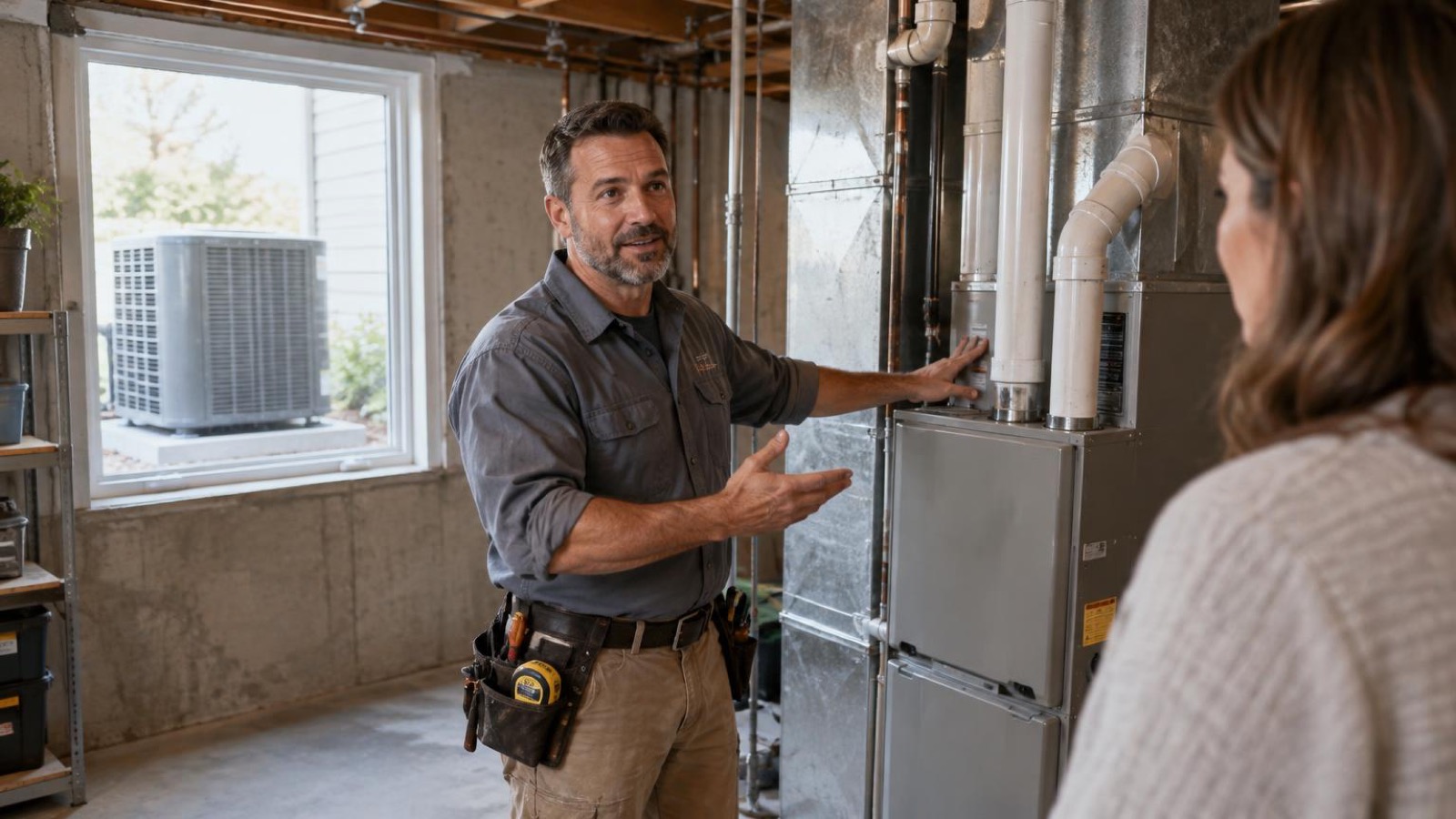
One heat pump maker just named the most common miss in the job: a switchover temperature set too high. The furnace still has a job, and the job has changed, and Daikin's King Tong says that one setting wastes the efficiency the homeowner already paid for. If you sell solar or remodels, my read is that the same habit is sitting in your pipeline right now.
The Furnace Still Has a Job
Dual-fuel setups — a heat pump plus a gas furnace — have traditionally been argued on cold weather. The manufacturers now say that line is getting blurrier. Today's inverter-driven and cold-climate models run at lower outdoor temperatures than earlier generations did, so the heat pump carries more of the load before gas takes over.
Daikin put a name on it: the company's D24V gateway accessory lets its FIT inverter heat pump pair up with an existing furnace and form an inverter-driven dual-fuel system.
King Tong, senior director of product marketing at Daikin Comfort Technologies North America, said a furnace and an outdoor unit seldom wear out on the same clock. A homeowner can have a furnace that still runs fine while the outdoor unit is finished. Then the contractor can install a variable-speed heat pump and leave the furnace in place. Tong noted the indoor evaporator coil will probably need replacing too, to match the new outdoor unit.
Tong also said the band of conditions where dual fuel is genuinely needed has gotten narrower as inverter-driven heat pumps improved in cold weather. "They're changing its purpose more than its existence," he said.
Midea sees the same opening. David Rames, a senior manager at Midea America Research Center, said dual fuel suits a home that already runs a gas furnace — it gives heat-pump-curious owners a path that needs no changes to the house.
Lennox takes a different angle. Nicholas Orth of Lennox Home Comfort Solutions, who directs outdoor equipment product management, said cold-climate heat pumps fit either approach, and urged dealers to treat them as all-climate solutions.
The cold-weather case is weaker than it used to be. Tong said an inverter-driven heat pump with variable speed holds its capacity well into single-digit temperatures.
So the equipment changed. What does that do to how the job gets sold?

Why This Is Happening Now
My read: two things moved at once — the hardware got better, and the controls got smarter.
Rames laid out three ways a dual-fuel system decides to go to gas — an outdoor sensor that trips below a set point, a thermostat timer, or a comparison of room temperature against the set point.
Jeff Goss, a director of product management for residential systems at Rheem North America, described a more data-driven version, where controls pull in indoor and outdoor temps, humidity, weather data and the load the house is about to need.
Tong said Daikin sees communicating controls plus modulating heat pumps going further, weighing outdoor conditions, the capacity a heat pump is actually delivering and local utility economics. The system picks gas or electric based on which fuel is cheaper and more efficient at that moment, not a setting locked in at install.
That last part is the whole story. The old way was a fixed number. The new way is a running decision.
Which raises the question a contractor has to answer at the kitchen table: where do you set the switchover?
Rames defined the balance point as the moment a home's heating load starts to outrun what the heat pump can deliver, and warned against carrying rules of thumb written for older heat pumps into today's inverter-driven systems.
Orth framed it as a trade-off between economics and comfort — a homeowner who puts comfort first may want a higher balance point, while a cost-first call turns on local gas and electric rates — and rates that move with the time of day make the math harder, especially when power costs more at peak.
Goss said the switchover temperature should come from the individual application. His rule: look at the home's heating load and pick the temperature that costs the least for that system.
Then there is the miss. "The most common miss is setting the switchover temperature too high," Tong said, which hands the job to the furnace sooner than needed and wastes the efficiency the homeowner already paid for.
Orth described a cousin of that problem. Contractors used to traditional heat pumps sometimes set a conservative balance point on cold-climate equipment, partly to dodge callbacks — which undercuts the reason the homeowner paid more for the cold-climate model.
Goss added that accurate heating-load calculations matter, along with sizing the heat pump right, accounting for what the furnace can do, local temperatures and the switchover plan. He said the two pieces should be treated as one system, not as separate equipment.
Rames made the same point about compatibility: the indoor unit, the outdoor unit and the controls all have to work together as one system.
Now here is my read for anyone who sells a big-ticket upgrade in somebody's home.
What This Means If You Sell Solar or Remodels
This is an HVAC story. But the miss Tong named is not an HVAC mistake. It is a sales mistake, and it shows up in your business too.
Picture a solar installer at a kitchen table. The homeowner has a gas furnace, a roof that faces the right way, and a utility bill that has been climbing. The installer's instinct is to lead with the electric bill, quote a system size, and talk payback. But Goss's advice to contractors was blunt: "Contractors should start by understanding the homeowner's priorities." Energy costs, comfort, the infrastructure already in the house and what the homeowner expects from the system. The installer who asks about the furnace, the age of the equipment and what the homeowner wants out of the next ten years gets a different conversation than the one who opens with kilowatts. Same roof. Same house. Different sale.
Picture a remodeling contractor walking a kitchen. The homeowner called because a countertop cracked. That is the trigger — one failed component, the same way a dead outdoor unit is the trigger for a heat pump swap. The remodeler who treats the cracked countertop as the whole job bids a countertop. The remodeler who asks what else in the house is on its last legs walks out with a plan instead of a repair. In my experience, the trigger is rarely the whole job, and the customer usually has more on the list than they said on the phone.
And there is the balance-point lesson. Every business has a setting somebody picked once and never revisited: the follow-up cadence, the ad budget, the price sheet, the lead-response time. Tong's point that the system should not run on a one-time number picked at install is a point about your marketing too. The market moved. The setting did not.
My read: the contractors who win the next two years are the ones who ask better questions before they quote, not the ones with the best equipment brochure.
How to Use It This Week
- Pull your last ten estimates. Write down the first thing the customer said when they called. Not what you said — what they said. If eight of the ten opened with a symptom instead of a goal, you have a question problem, not a lead problem. Twenty minutes.
- Ask the priority question before you quote anything. Goss's advice to contractors translates straight across. On a solar call, before you size anything, ask what the winter bill looks like now, what the homeowner wants it to look like in five years, and how old the furnace and water heater are. Then stop talking and write down the answer.
- Use the what-else-is-on-its-last-legs question on every remodel walk-through. On a countertop call, ask what else in the house is keeping the homeowner up at night, then say what is worth doing now and what can wait. That second part is the whole trick. You are not upselling. You are sorting.
- Find your one-time setting. Pick the number in your business that was set once and never checked — ad spend per market, follow-up timing, the price sheet. Write it on a sticky note and put it where you quote. Then check it against this month's numbers. Fifteen minutes.
- Give the customer the trade-off in plain English. My read: Orth's comfort-versus-economics split is the clearest way to explain a big-ticket decision I have seen. On your next estimate, add one line that says what the customer gets if they spend more and what they give up if they spend less. No jargon.
- Check the first screen of your website. Does it answer the question the customer actually called about, or does it talk about your company? If the first line is about how long the company has been in business, rewrite it this week.
- Time-box the follow-up. In my experience, a lead that sits more than a day gets harder to close. Set a rule your team can keep — a call the same day, a text the next morning — and check it Friday.
Mistakes to Avoid
- Quoting before you ask. The fastest way to lose a big-ticket job is to price a solution to a problem the customer never told you about.
- Using a rule of thumb built for older equipment. Rames warned against rules of thumb built for older heat pumps. My read: your cost per lead and your close rate have probably moved too.
- Setting it and forgetting it. A number that was right in the spring can be wrong by fall. Recheck it monthly, not annually.
- Explaining the equipment instead of the decision. Homeowners do not buy capacity. They buy the version of next winter they want.
The Setting Nobody Revisits
Everything above comes down to one habit. Somebody set a number once, and nobody has looked at it since.
That is what I look for when I walk into a business. The ads are running. The website is up. The setup works — sort of. Nobody has checked whether the pieces still fit the market they are running in.
If you sell solar or remodels and nobody outside your company has looked at your setup in a year, that is the thing I would fix first. Not a new tool. Start with the numbers you already have.
Get my free Game PlanFree 30-minute review of your ads, website and setup.
Disclosure: Brandon Correll founded SalesBeast, which is mentioned and advertised on this page. Facts are drawn from the linked sources; analysis and advice are his opinion.
Brandon Correll founded SalesBeast. Over $75 million in online sales, built two companies to eight figures, and built multiple 8-figure sales teams.
 Business
36% of School Districts Flagged Air Problems in at Least One School. Contractors Push Ahead No Matter Who Wins
Keep reading
 Business
More Than Half of Campers Quit a Booking. Dealers, Check Your Phone
 Business
75% of Shoppers Say They'd Try a New Store. Most Owners Don't Plan to Ask for an Email.
 Business
76% Expect a December Rate Hike. Boat Dealers, Read This
 Business
79% of Consumers Had Under $1,000 Set Aside for the Holidays — Your Bills Didn't Wait
 Business
86,000 Jobs Added in October — and the Bigger Raises Went to Job-Changers
 Business