Walmart's AI Assistant Users Spend 40% More Per Order as New Features Roll Out
Walmart's AI assistant just got bigger for the holidays, and the numbers behind it are the ones every dealer and contractor should see.


Shoppers who use Walmart's AI assistant spend 40% more on each order than shoppers who don't, according to CEO John Furner. Walmart just rolled out new visual search and cart-building features ahead of the holidays. Visual search lifted conversion 57% versus typed searches. If you sell cars or run service calls, my read is that this is your problem now.
Walmart Just Gave Its AI Assistant a Camera. The Numbers Behind It Are Loud
Walmart just gave Sparky the ability to read images and build a cart ahead of the holidays. Sparky is the retailer's AI shopping assistant. The company also started adding voice features in more than one language. Someone with a stained holiday tablecloth can now send in a photo and get answers, ideas and delivery help.
One feature, Shop to Light, marks where an item sits on a store map. Once the shopper reaches that spot, they can trigger the electronic shelf label.
That is not a gimmick. That is a new front door.
Sparky first showed up in June 2025. Since then, use of the tool has climbed 70%. In August, Walmart CEO John Furner shared that shoppers who use it spend 40% more on each order.
Then there is the number I keep coming back to. According to Walmart U.S. CEO David Guggina, conversion jumped 57% with visual search compared with shoppers who typed.
Fifty-seven percent. From letting a customer point a camera instead of typing.
And Walmart is not keeping any of this inside Walmart. Earlier this year it brought Sparky into OpenAI's ChatGPT, and it also works with Google's Gemini. Last month it added features that let AI agents reach its platforms.
Which is why the next part matters more than the feature list.
Why Walmart Is Doing This Right Now
Shoppers this season are focused on efficiency and value, and the new tools aim to go beyond comparing prices and products. If the assistant does the thinking, the shopper does not wander.
Walmart is not alone in this. Target is beta testing a helper called Ask Target on its site and app. Amazon's Alexa for Shopping has picked up users. Best Buy's Ask Blue is made to give advice on picking a product.
My read: the biggest retailers are racing to answer the customer's question before the customer types it into a search box.
There is a trust problem sitting in the middle of it. Walmart's digital shelf tags drew questions about whether the company was using dynamic pricing. Furner pushed back. He said Sparky would not be used to raise prices or hide cheaper items.
Furner wrote in an open letter that when a shopper uses Sparky, "that’s an invitation to serve you better," not a route to a personalized price. He also said Walmart has never leaned on the bond between its store staff and shoppers to charge more, and it will not start now that AI is in the mix.
My read: the pricing fight is a distraction for you. The real story is that customers are getting comfortable asking a machine what to buy — and that habit does not stay in the grocery aisle.
What This Means If You Sell Cars or Fix Homes
Label this as my opinion, because it is.
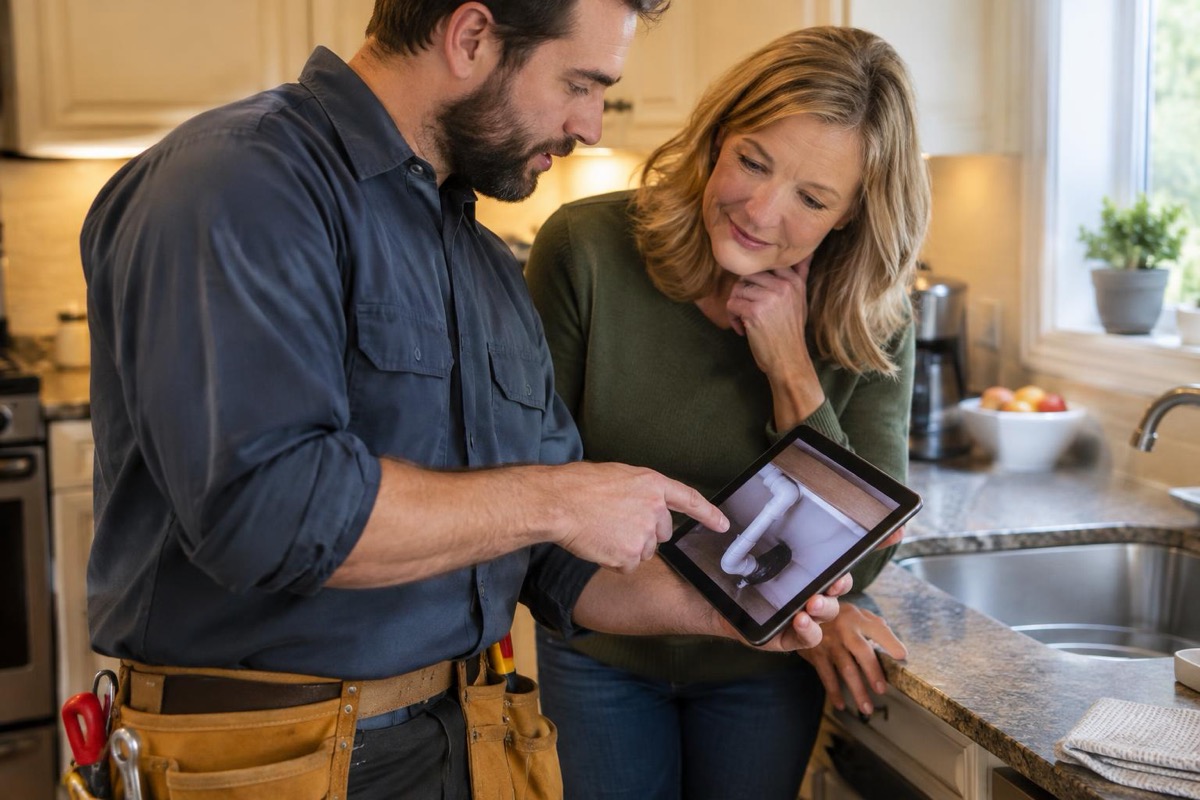
Picture a couple who needs a new roof. One of them takes a photo of the water stain on the ceiling and asks what is going on and what it costs. The assistant gives an answer, a couple of options, and a short list of local companies. Your name is on that list or it is not. By the time they call, they have already decided whether you look credible — and you never got to make your pitch.
Picture a dealership. A shopper asks an assistant to find a three-row SUV near their zip code. The assistant pulls from whatever it can read about your inventory. If your listings are thin, stale, or buried on a slow page, you lose that deal before the phone rings.
Picture an HVAC company in July. Somebody's AC dies at 4 p.m. They ask their phone who can come today. The answer is built from whatever that assistant can find — hours, service area, reviews, a phone number it can trust. The company with the cleanest and fastest presence gets the call. Everybody else gets a voicemail they will never hear.
That is the shift. The customer still buys from a human. But a machine is doing the first sort now. So what do you actually do about it this week?
How to Use This in Your Business This Week
You do not need to build an AI assistant. You need the assistant to find you, and you need a human to close when it does. Here is what I would do, in order.
- Open your website on your phone, on cell data, not wifi. Time it. If your homepage takes more than about three seconds to show something useful, that is your first fix. Speed is a sales problem, not a marketing problem.
- Look at what a stranger sees in the first screen. Can they tell what you sell, where you are, and how to reach you without scrolling? If not, rewrite that top section today. One line on what you do, one on where you do it, one tap-to-call button.
- Put your service area and hours in plain text. Not an image, not a PDF. Plain words on the page, in the same format everywhere — your site, your Google profile, your listings. My read: consistency reads as trust to people and to machines.
- Clean up your inventory or service listings. For dealers: year, make, model, trim, mileage, price, photos. For contractors: the specific jobs you do, the towns you cover, and real photos of real work. Stale listings are worse than no listings.
- Add a short form and a tap-to-call button to every page. Not just the contact page. Somebody who lands on a service page at 9 p.m. should be able to raise a hand in one tap.
- Answer the phone and text back fast. An assistant can hand you a warmer lead than you have ever gotten. It cannot close for you. If your follow-up is slow, everything above is wasted.
- Write down the answers to your ten most common questions. Plain sentences, on your site. My read: that is what an assistant looks for when it decides who to recommend.
If you want a starting point, here are three scripts. Copy them and swap in your own details.
For a home services company, a page intro:
Roof leak or storm damage in [your town]? We inspect it, give you a written estimate and tell you what is urgent and what can wait. Call now, or send a photo and we will tell you what we are looking at.
For a dealership, a listing description:
2021 three-row SUV, [mileage], one owner, clean title. Third row folds flat, towing package included. Financing on site. Tap to call and we will hold it for you today.
For a text back after a missed call:
Sorry we missed you — this is [name] at [company]. What is the address, and what is going on? I can give you a straight answer in a few minutes.
None of that needs new software. It needs you to write down what you already know. The bigger risk is not the writing. It is the stuff owners skip.

Mistakes I See Owners Make With This
- Chasing the tool instead of the customer. You do not need to know which assistant is winning. You need to be findable and fast when somebody shows up.
- Assuming your website is fine because you like it. Your website is not for you. It is for a stranger on a phone in a parking lot.
- Letting leads sit. A shopper who used an assistant to get to you is further along than one who did not. A warm lead that waits two days is a cold lead.
- Copying the giants and skipping the basics. You will never out-build Walmart. You can absolutely out-answer the shop across town.
And there is one piece almost everybody skips, even after they fix the rest.
The Front Door Is the Part Most Owners Skip
Here is the uncomfortable part of all this. My read: Walmart's assistant works because the experience behind it is fast, visual and built to move a person toward a decision. Your website is the same front door.
My read: dealer and contractor sites are often built to look good on a desktop years ago. They load slow, the phone number is buried, the form asks for eight things, and nobody owns the site but the agency that built it.
Over $75 million in online sales, built two companies to eight figures, and built multiple 8-figure sales teams for our own businesses. That is the lens I look through: the front door decides everything else. You do not need Walmart's budget. You need a site that loads fast, answers the question, and makes it easy to call.
If you want to see what that looks like for a dealership or a home services company, take a look at what we build.
See our websitesOpens salesbeast.com
Disclosure: Brandon Correll founded SalesBeast, which is mentioned and advertised on this page. Facts are drawn from the linked sources; analysis and advice are his opinion.
Brandon Correll founded SalesBeast. Over $75 million in online sales, built two companies to eight figures, and built multiple 8-figure sales teams.
 AI
77% of Surveyed Small Business Owners Say They Use AI. What It Means for Your Sales Team
Keep reading
 AI
Okta Says 80% of Agentic Commerce Projects Are Stalled — and Buyers Want a Say Before an Agent Acts
 AI
One Test Logged 150+ Contacts in 36 Hours. Only 1 in 10 Got a Rep.
 AI
Pypestream's AI Agents Now Resolve About 9 of 10 Inquiries — and Dealers Are About to Feel It
 AI
AI Takes Routine Customer Service. Your Team Gets the Hard Cases
 AI
CrowdStrike Just Built an Off Switch for Rogue AI. Dealers and Contractors Should Care
 AI