Local Pack Ads Jumped to About 22% of Tracked Mobile Keywords
Yext just bought the machine that runs ads store by store. Here's what a dealer should steal from it.


Yext bought the software that runs ads store by store, and it closed the deal in 33 days. The company says multi-location brands often run ads nationally because running them location by location is more work than most teams can scale. Meanwhile, Google's local pack ads climbed from under 3% of the mobile keywords Places Scout tracked in early November 2025 to roughly 22% by January 2026. My read: if you sell RVs or golf carts off one lot, that squeeze is already on you.
Yext Bought the Machine That Runs Ads Store by Store
Yext, which is based in New York and helps chains keep their location details correct online, announced on November 2, 2026 that the Flamel.ai deal was done. Flamel.ai is a marketing platform that uses AI to plan and run paid ads location by location for franchise systems and other multi-location brands. The agreement was signed on September 30 at Yext's Envision customer conference, and the purchase closed 33 days later. No purchase price was made public.
The release came out at 4:40 PM Eastern on November 2 through Business Wire, after the New York Stock Exchange closed. Yext trades there as YEXT. The company profile listed Michael Walrath as chief executive and 1,100 employees.
The point, Yext says, is to combine Scout's read on the competition with Flamel.ai's ability to run local ads, so money goes to places where it changes the result.
Yext lays out three pieces. A brand can build a campaign once and let software adjust it for each location. Local owners and franchisees can decide whether to join, using offers and budget limits the brand has already approved. Brands will be able to handle hundreds of ad accounts and many creative versions in bulk across major ad platforms, with brand oversight and reports for each location in one place.
Watch the tense. The release uses future tense about the rollout: brands will be able to do it, not that they can today. The release gives no launch date for Flamel.ai's tools inside Yext, and it does not say whether Flamel.ai will keep being sold on its own.
Chris Brownlee, who is Yext's senior vice president of product, described the purchase as a matter of replacing manual effort with automation. In his view, handling every step — creative, budgets and optimization — is “more than any team can do by hand”. Paul Ehlinger, who founded Flamel.ai and serves as its chief executive, discussed reach, observing that “each platform adds another layer of complexity that makes scaling difficult”.
Flamel.ai's site, which now says it is joining Yext, calls itself “the marketing hub for franchises”. Its paid products break out by network: Meta ads for Facebook and Instagram at each location, Google Ads for local search and display plus AI Max, and ChatGPT ads, which the site pitches as putting each location one click away inside OpenAI's assistant.
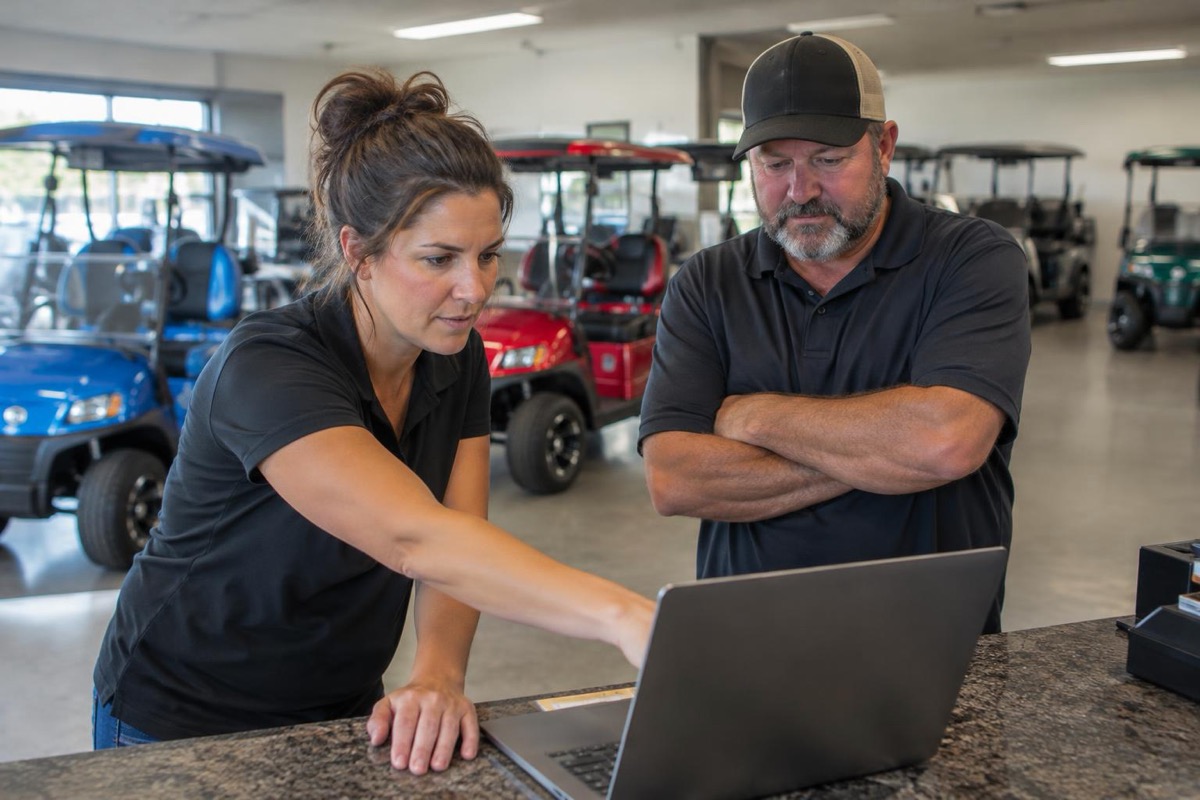
The Backstory: The Screen Above Your Free Listing Is Filling Up
Places Scout data reported in February covered 1,200 mobile ranking reports. It put Google's local pack ads at under 3% of the mobile keywords it tracked in early November 2025, then near 22% by January 2026. My read: that is the strip above the free listing, the space where a dealer's name used to sit for free.
Google's AI products also use the profile data Yext manages as an input. In April, Google said that Ask Maps, which runs on Gemini, works from data on 300 million places. Google's search product leadership said in October 2025 that AI Mode leans on a pool of 250 million real-world places to suggest businesses.
Then there is the newest ad channel. In May, OpenAI opened ChatGPT Ads Manager to every US business, with bidding by the click as well as the CPM model it already offered, following a test that began on February 9. By September, HubSpot and Shopify users could run ChatGPT campaigns, and in August AdRoll gave select small-business and B2B customers ChatGPT ad access. OpenAI added 26 countries on October 21, taking ChatGPT ads to 89 markets. It said more than 100,000 advertisers had run campaigns, which is a cumulative count.
This is not empty ground. Fluency, a vendor that sells ad automation to agencies, reports that its software handles about $3 billion in yearly ad spend in over 250,000 campaigns a month, working with 150 agencies and over 50,000 locations. In August, Fluency said its language model layer only makes recommendations, and that deterministic agents alone may execute live spend.
For a chain, every new network multiplies the account structure. That is the complexity Ehlinger described. My read: for a dealer with one lot, the problem is simpler and worse: more places to be invisible.
What It Means for an Owner Who Sells (My Read)
Everything from here is my opinion, not reporting.
Picture an RV dealer with two lots, one on the interstate and one 40 minutes out. The old plan is one regional campaign with one budget. But a buyer 15 minutes from the north lot and a buyer 15 minutes from the south lot see different maps. If paid ads now hold roughly a fifth of tracked mobile keywords, the free listing you have leaned on is sharing the screen with ads. Your cost per lead gets blended across both lots, and the weaker lot hides inside the average. You will not see which one is bleeding until the year is over and the math is ugly.
Picture a golf cart dealer working a 20-mile radius around a retirement community. Buyers search close to home and buy close to home. One campaign for the whole county pays to reach people who will never drive over. One offer, one budget and one set of creative per location is the model Yext just bought. You are both the brand and the local operator, so you can run it without waiting for anyone's permission.
Picture a golf cart dealer who added a second store near a big course. Same brand, same website, two very different trade areas. A single blended report will tell you the season was fine when one store carried the other. Location-level reporting is the thing to ask for, and it is what Yext says brands will get in one place.
How to Use It This Week
1. Check your location data before you spend a dollar. Yext built its business keeping store details accurate across search engines and maps for shops, restaurants and branches. That same data is now an input for Google's AI products. Open your Google Business Profile for every lot and fix the address, hours, phone number and category. Ten minutes per location.
2. Search your money keywords on your phone, standing on your lot. Type RV dealer near me or golf cart dealer near me and count the ads above your free listing. The local pack data was tracked on mobile, so do it on mobile. Do it again next week and see if the number moved.
3. Write one offer per location, not one per company. Yext's model lets local owners and franchisees choose from approved offers and budgets. You are both roles. Write down what each lot can actually honor this month, put a number on it, and stop running the same ad for both.
4. Set a hard monthly cap per location before you turn anything on. The opt-in design in the Yext release puts a budget ceiling in front of the local operator. Copy that discipline. If your north lot gets a bigger cap and your south lot gets a smaller one, that is a decision you make on purpose.
5. Run more than one version of every ad and kill the loser fast. Brands will be able to manage many creative versions in bulk, per the release. You can do the small version by hand: three headlines, three images, one offer, and cut the worst performer after a week.
6. Ask for location-level reporting, not one blended number. Yext says brands will get brand oversight and reports for each location in one place. Demand the same from anyone who runs your ads. If the report cannot tell you which lot produced the calls, it is not a report.
7. Write the copy yourself once, then reuse it. Paste these into whatever AI tool you already use. Swap the brackets.
Write three Facebook ad variations for a family RV dealer in [town]. The offer is [this month's special]. Audience: families within 30 miles. Each ad under 40 words, lead with the offer, end with a call to book a walkthrough.
Write three Facebook ad variations for a golf cart dealer in [town] near a 55-plus community. The offer is [this month's special]. Audience: homeowners within 20 miles. Each ad under 40 words, and mention that we service what we sell.
Write three Google search headlines for an RV dealership in [town] for people searching travel trailer for sale near me. Keep each under 30 characters and mention our lot and our service department.

Mistakes to Avoid
- Do not trust one return number. Flamel.ai's site puts the same 512% number in two places and calls it two different things — average return on investment in one case study and return on ad spend in a stats box. The site does not explain how it got either number, or for what window. If a vendor's own page cannot keep those two measures straight, ask what you are actually measuring before you sign anything.
- Do not let software move your money without a name attached. In May, a Pizza Hut franchisee with about 111 locations filed a suit over an AI dispatch system that the complaint says cost its business at least $100 million. Those are allegations in a complaint, and the case is about delivery logistics, not advertising. It still shows what is at stake when someone else's system decides how your money gets spent.
- Do not run one campaign for two lots. A blended average hides the store that is losing. You will find out a year later, when the math is already done.
- Do not judge by clicks. My read: clicks are cheap to buy; calls and walk-ins are what pay the note.
The Part You Can Hand Off
Everything above is work. Some of it you should keep, and some you should hand to someone who does it every day.
Here is what I would do. Find a person or team that runs local ads for a living. Ask to see one account with several locations, not one big national account. Ask how they split budget by lot, how they write offers per store, and how they report calls and walk-ins. If they cannot answer those three questions, keep looking.
My rule would be simple: the ad account stays in your name, and you pay the platform directly. Then run a small test. One lot, one offer, one month. If the report cannot show which calls came from which lot, stop.
That is the part worth handing off. The decisions stay with you.
See how we run adsOpens salesbeast.com
Disclosure: Brandon Correll founded SalesBeast, which is mentioned and advertised on this page. Facts are drawn from the linked sources; analysis and advice are his opinion.
Brandon Correll founded SalesBeast. Over $75 million in online sales, built two companies to eight figures, and built multiple 8-figure sales teams.
 Marketing
67% of Homeowners Ask Around Before They Pick an HVAC Contractor — Your Crew Is Your Best Ad
Keep reading
 Marketing
A Form Fill Isn't Automatically a Prospect. Here's What Your Sales Team Should Count Instead.
 Marketing
AI Already Picked Its Shortlist — Before It Searched
 Marketing
Average Service Business Scores 31 Out of 100 on an Agency's AI Search Audit
 Marketing
Over 6 Million AI Pages From Facebook Are Ranking in Google Right Now
 Marketing
83 Questions, Most Built From Google's Own Advice — Fifty-four Land on One Dealer Page
 Marketing