Agents Miss 40 to 46 Percent of Incoming Calls. AI Now Answers Them First.
Real estate agents miss 40 to 46 percent of incoming calls — and the same speed math is running on your sales floor.

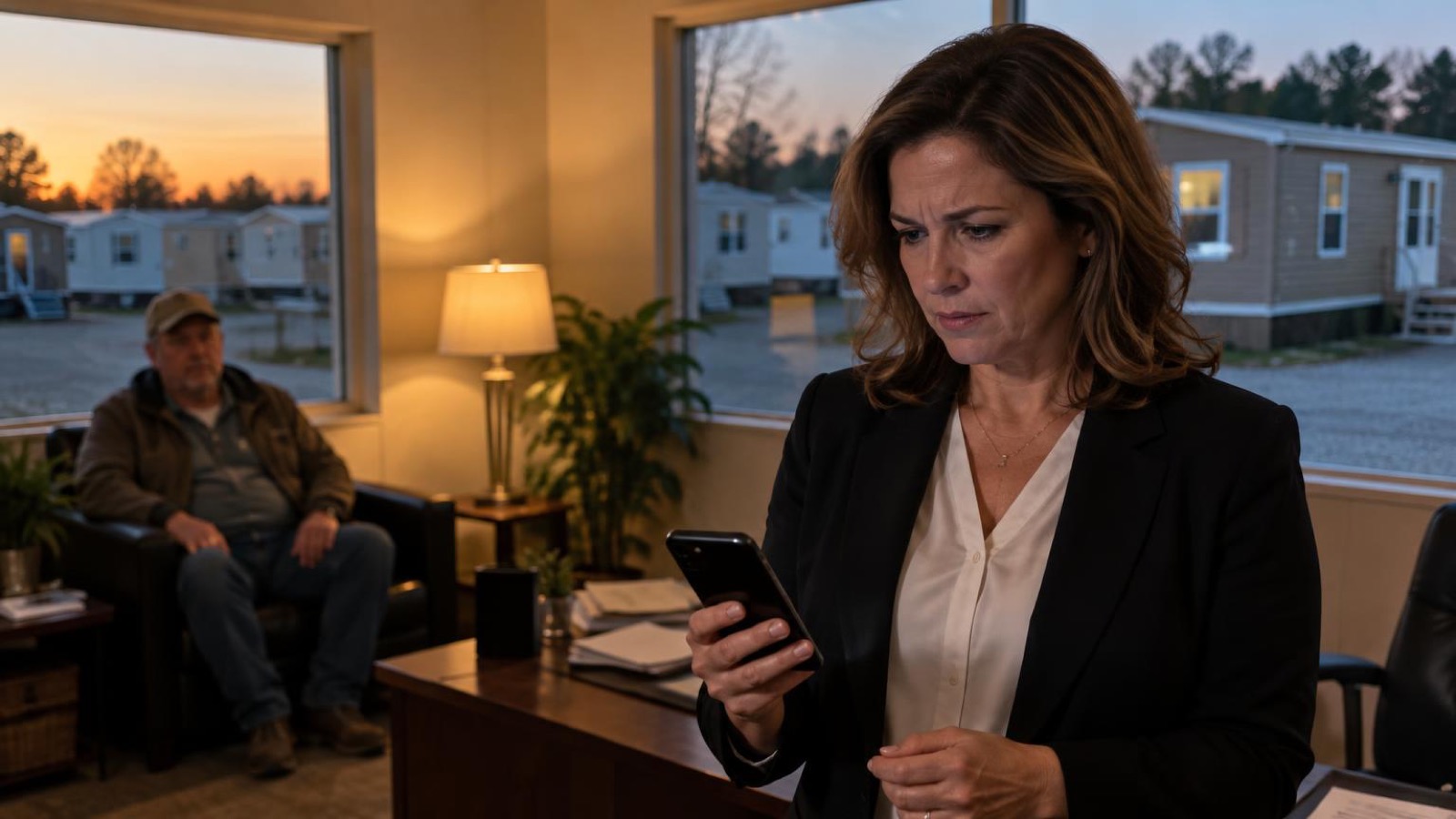
Mike is mid-showing on Maple Drive, a buyer beside him asking about the roof, when his phone buzzes. He can't pick up. Twenty minutes later his phone shows one missed call and no voicemail — and that caller has already booked a Saturday tour with another agent.
A missed call, twenty minutes, and one lost commission
He was not careless. He was working. Agents miss between 40 and 46 percent of the calls that come in, according to call-tracking data gathered across the industry.
And the clock works against them. More than 6 in 10 leads come in outside normal business hours — buyers scroll listings after dinner, and sellers take a quiet Sunday to think it over.
So the phone rings when nobody is at the desk, and it rings while the one person who could answer is mid-sentence with somebody else. There is a fix being sold for exactly that, and the price tag is the least interesting part of it.

What is actually being sold
An AI receptionist answers every call as it comes in, at 2 PM or at 2 AM. It runs the same questions a good front desk person would: buying or selling, the area they want, their timeline, and whether they are pre-approved. Then it books the appointment and texts you the details.
Tools like AgentZap push the lead into CRMs such as Follow Up Boss or kvCORE, so no one has to enter it twice.
Then there is the money. A full-time human receptionist costs a brokerage or an agent between $35,000 and $45,000 a year, based on Bureau of Labor Statistics wage data. An AI receptionist usually runs $50 to $300 a month. That leaves a gap of $30,000 or more every year.
My read: price is not why this is spreading. One number is.
The number I would tape to the sales room wall
Harvard Business Review audited 2,241 US firms and found that a company which got to a new lead inside the first hour was nearly 7 times more likely to qualify that lead than one that waited even an hour longer.
"In the first conversation, speed beats almost everything else," PC Tech Magazine reports.
Now look at your own sales floor. Not the best pitch. Not the best product. The first hour.
Why this is landing right now
Two things are colliding.
The first is the lead timing above: the calls land after hours, when your best people are off.
The second concerns the demand side. Ken Wingert, NAHB's chief advocacy officer, told Inman that buyers often stall and sit tight until the uncertainty passes before committing to a major decision. He added that if rates dip below 7 percent and settle into the mid-6s, the demand that retreated to the sidelines could return.
My read: that demand does not evaporate. It parks, and then it moves all at once, usually after dinner. Whoever answers after hours gets the deal.
What this means if you sell manufactured homes
Picture a dealer with homes on the lot and one salesperson on the floor. A couple drives past, reads the sign, and calls after hours. Nobody picks up. They call the dealer two exits down and book a walkthrough for the next morning.
That couple's decision had nothing to do with your homes. PC Tech Magazine is blunt about the pattern: the buyer usually goes with whoever picks up first, not the agent with the best photos or the most years in the business.
Now run it again with an answer. Four questions, a couple of open times, and a text to your salesperson's phone before he has finished dinner. He walks in the next morning with a name, a budget and a time.
What this means if you run an insurance agency
Picture an agency where a prospect calls for a quote after hours, once the kids are down. Missed call. No voicemail. They dial the next agency on the search results page.
My read: insurance has a second problem stacked on top of that one — the calls do not all belong to the same person. PC Tech Magazine describes teams that split leads, where a routing rule sends each caller to the right rep by territory or specialty, rather than letting every call land on one phone. If your agency runs producers by county or by line of business, that is the piece to steal first.
Your reps are not lazy. They are at capacity.
The Brewers just won it all, and the Rays and Brewers both invest heavily in mental performance training — as does every Major League club. Baseball decided the mental side of the game was worth paying for.
The Giants hired a consultant and gave the role the title "Breathing Specialist." Players joked about it. The next season he was back doing the same job with a different title, "Human Performance Coach," and the pushback faded. Before he moved on, roughly 15 players were showing up to his sessions on a regular basis. He concluded that what put players off was the job title, not the practice itself.
There is data behind the work, too. In one study of Division I players, higher mindfulness scores went with better free-throw shooting in games — a 5.75-point gap. A second study looked at attention training and found that the gap between athletes who did the work and those who did not was wider when stress was high than when it was low (Inman).
My read: pressure narrows attention. A rep who is mid-conversation with a customer cannot also be a receptionist. You can train focus all you want, but you still cannot be in two places at once. That is a coverage problem, not a motivation problem.

How to use this week
- Export your missed calls. Open your phone system or your CRM and pull the last 30 days of missed and abandoned calls. Count how many landed outside 9-to-5. Twenty minutes.
- Send yourself a test lead at 8 PM. Use your personal phone and a name you will recognize. Time how long it takes for someone to call back. Write the number down.
- Write the four questions you want asked on every inbound call. PC Tech Magazine gives the front-desk script: buying or selling, area, timeline, pre-approved (PC Tech Magazine). Swap in your trade's version.
- Name one owner for after-hours leads. Not the team. One person, by name, with a backup.
- Set the routing rule. Route by territory or specialty rather than letting every call land on the same phone (PC Tech Magazine).
- Put a human on the drafts. If you use AI follow-up, a rep approves the message before it goes out. Nobody wants a robot handling a claim question.
- Measure the first hour. Track the share of new leads contacted inside 60 minutes. That is the number from the HBR audit (PC Tech Magazine).
If you are writing the after-hours script yourself, here is the shape I would use.
- Manufactured home dealer: Ask one question at a time — what size home they want, whether they already have land, how soon they want to move in, and whether they have talked to a lender. Then offer two appointment times and text the details to the sales manager.
- Insurance agency: Ask what they need covered, whether it is a new policy or a change to an existing one, their zip code, and the best time to reach them. If they ask about price, take the details and say a licensed agent will call back within the hour.
- Missed-call text back: Say who you are and where you are from, ask what they are looking for and the best number to reach them, and offer to hold two times today.
Mistakes to avoid
- Buying the tool and skipping the routing. If every after-hours lead still lands on the owner's phone, you have bought an expensive voicemail.
- Letting the AI guess. PC Tech Magazine says these systems stay inside a narrow lane: the basics of a property, scheduling, and the questions that qualify a caller. Anything past that gets a detailed message and an alert to you. Give yours a short leash.
- Confusing more activity with more attention. When the market tightens, the usual prescription at a brokerage is more activity: more dials, more door knocks, more open houses (Inman). Pressure narrows attention. More dials from a distracted rep is not the same as more conversations.
- Waiting for the uncertainty to clear before you fix your follow-up. The demand is parked, not gone (Inman). The phone will ring either way.
Opens salesbeast.com
Sources
Disclosure: Brandon Correll founded SalesBeast, which is mentioned and advertised on this page. Facts are drawn from the linked sources; analysis and advice are his opinion.
Brandon Correll founded SalesBeast. Over $75 million in online sales, built two companies to eight figures, and built multiple 8-figure sales teams.
 AI
HVAC and Roofing Owners: Five AI Prompts for the Marketing Chores That Eat Your Week
Keep reading
 AI
77% of Surveyed Small Business Owners Say They Use AI. What It Means for Your Sales Team
 AI
8 PM on a Saturday: The Lead Lahzo's CEO Wants Answered
 AI
Okta Says 80% of Agentic Commerce Projects Are Stalled — and Buyers Want a Say Before an Agent Acts
 AI
One Test Logged 150+ Contacts in 36 Hours. Only 1 in 10 Got a Rep.
 AI
Pypestream's AI Agents Now Resolve About 9 of 10 Inquiries — and Dealers Are About to Feel It
 AI